

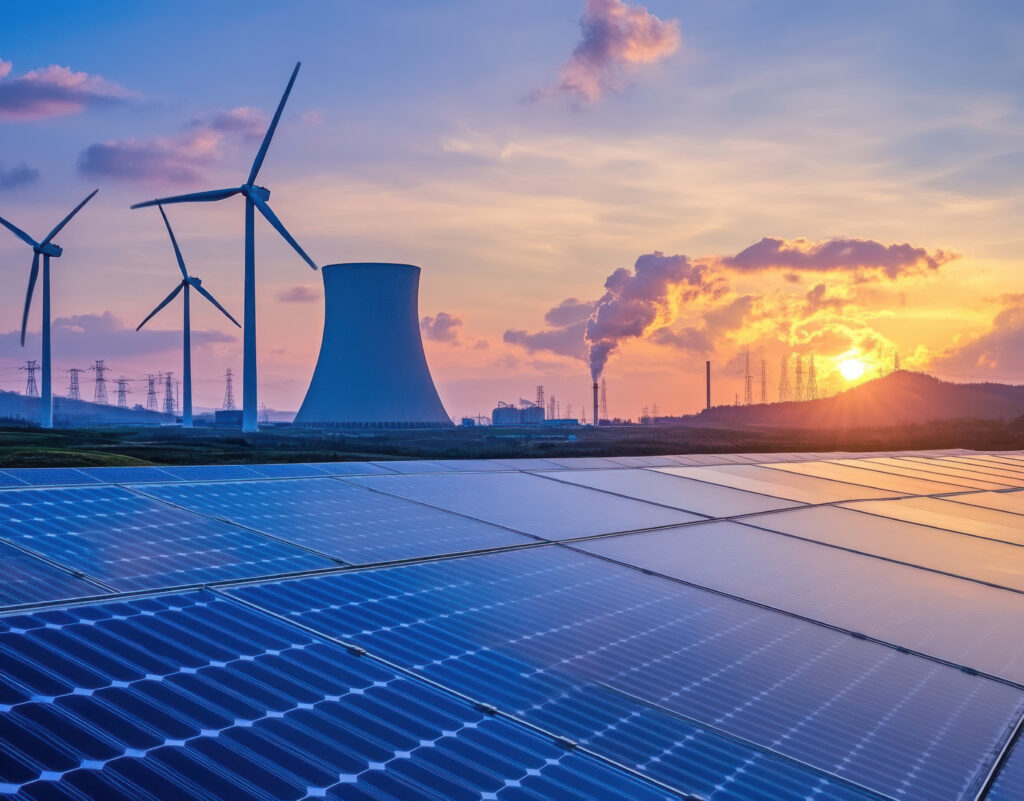
Energy usually sits in the background of daily life here, but energy companies in Singapore are critical to keeping the economy running – from powering data centres and MRT lines to supplying industrial parks and households. For Singapore-based investors, the sector spans regulated utilities, environmental services, transition-focused businesses and global exposure via energy ETF options.
As a land-scarce, import-dependent hub that relies heavily on natural gas for power generation, Singapore is balancing reliability with a push into solar, regional power imports and low-carbon solutions. This creates an investable universe that includes defensive utilities, energy-transition plays and diversified global energy ETFs.
This guide gives Singaporean prospective investors a concise overview of energy companies in Singapore, key SGX-listed stocks, major global energy ETF choices, and how to combine them within a long-term portfolio.
Invest in the Energy Industry with Syfe Brokerage
Whether you’re looking at energy companies on SGX or the US market, you can access them all in one place with Syfe Brokerage. Trade SGX and US stocks and ETFs from a single platform, fund in SGD and auto-convert seamlessly when you need to.
What’s more, enjoy unlimited free U.S. trades for your first 3 months, plus at least 2 free U.S. trades monthly thereafter — no platform fees and no hidden charges.
Table of Content
- Singapore’s Energy Landscape in a Nutshell
- Types of Energy Companies in Singapore
- Energy Stocks for Singapore Investors
- Energy ETFs: The Three Main Buckets
- Stocks vs ETFs: How Should a Singapore Investor Choose?
- Building an Energy Allocation: Practical Framework
- Key Risks When Investing in Energy
- How to Access Energy Stocks and ETFs Via Syfe Brokerage
- Quick Takeaways
- Conclusion
- Frequently Asked Questions (FAQs)
Singapore’s Energy Landscape in a Nutshell
Liberalised electricity market, regulated grid
Singapore’s electricity market is partially liberalised:
- Generation companies (gencos) bid into a wholesale electricity market.
- Retailers package and sell electricity plans to households and businesses via the Open Electricity Market (OEM).
- SP Group owns and operates the national transmission and distribution grid as the regulated monopoly transmission licensee.
For investors, this means:
- You mostly access the sector through listed utilities and infrastructure stocks (for example, Sembcorp Industries, Keppel Ltd, Keppel Infrastructure Trust).
- The grid itself (SP Group) is unlisted, but the regulatory framework and carbon-pricing policies shape everyone else’s economics.
Fuel mix: gas-heavy, slowly greening
Singapore still generates over 95% of its electricity from natural gas, with the remainder coming mainly from solar and waste-to-energy plants.
At the same time, policy is shifting towards a net-zero emissions target by 2050, supported by:
- More solar (rooftop and floating), with national plans targeting around 2 GWp of solar capacity by 2030.
- Large-scale low-carbon electricity imports via regional power grids – Singapore now aims to import around 6 GW of low-carbon electricity by 2035, roughly one-third of projected demand.
- Low-carbon alternatives such as hydrogen and carbon capture, alongside energy efficiency.
This policy backdrop influences which energy companies in Singapore grow and which legacy businesses face gradual decline, and it underpins the long-term case for both traditional energy and transition-focused energy ETF exposure.
Types of Energy Companies in Singapore
1. Power generation and multi-utilities
These companies own gas-fired plants, cogeneration facilities and, increasingly, solar or waste-to-energy assets. Revenue typically comes from:
- Selling electricity into the wholesale market.
- Long-term power or utilities contracts with industrial customers.
- Providing steam, water and other industrial utilities.
Key listed names include:
- Sembcorp Industries (SGX: U96) – an integrated energy and urban solutions company with a growing renewables portfolio across Asia, including wind and solar; it has been actively recycling capital away from coal and older fossil assets into sustainable solutions.
- Keppel Ltd (SGX: BN4) – a Temasek-linked global asset manager and operator with strong infrastructure capabilities, including district cooling and low-carbon energy solutions through its Infrastructure division.
These are often seen as core Singapore energy companies for investors who want both dividends and exposure to the energy transition.
2. Utilities and environmental services
These companies provide water, waste-to-energy and environmental services, often backed by long-term concessions or regulated returns:
- Keppel Infrastructure Trust (SGX: A7RU) – Singapore’s largest listed infrastructure business trust, with assets including power plants, gas, waste-to-energy and water/desalination facilities in Singapore and overseas.
- China Everbright Water (SGX: U9E) – a water environment management company focusing on municipal and industrial wastewater treatment, water supply and river-basin ecological restoration.
- SIIC Environment (SGX: BHK) – an integrated water and environmental player engaged in wastewater treatment, water supply, sludge treatment and waste incineration projects across China.
- Zheneng Jinjiang Environment (SGX: BWM) – one of the earlier and leading waste-to-energy (WTE) operators in China, developing, constructing and operating WTE facilities under long-term concession agreements.
These utilities and environmental services stocks often appeal to investors seeking defensive cashflows and dividends tied to essential services rather than commodity prices.
3. Gas distributors and related plays
Domestic gas distribution and LPG players provide more targeted exposure:
- Union Gas Holdings (SGX: 1F2) – a leading supplier of bottled LPG to households in Singapore, and also involved in compressed natural gas (CNG) and diesel distribution for households, commercial and industrial customers.
While smaller and more volatile than large utilities, such stocks offer a more direct link to local gas consumption.
4. Fossil fuel and resource names
Singapore does not host large upstream oil & gas majors on SGX, but there are energy-linked resource plays such as:
- Geo Energy Resources (SGX: RE4) – a coal mining and trading company with operations in Indonesia.
These are generally higher-risk, cyclical stocks that are sensitive to global coal or oil prices and evolving policies on fossil fuels.
If you are particularly interested in oil & gas companies in Singapore, Syfe’s dedicated guide provides a deeper dive into that sub-segment.
5. Renewable and green-transition stocks
A growing cluster of companies is tied to renewables, low-carbon infrastructure or broader smart-city / energy-efficiency themes, for example:
- Sembcorp Industries (U96) – significant renewables capacity in India and Southeast Asia and ongoing plans to expand its green portfolio.
- Keppel Ltd (BN4) – active in decarbonisation solutions, district cooling and other sustainable infrastructure projects.
- ST Engineering (SGX: S63) – not a pure energy company, but its Smart City and Urban Solutions businesses provide smart utilities, smart lighting, waste-to-energy and energy-efficient infrastructure solutions.
If you’re focused on ESG and clean energy, also see Syfe’s article on investing in the Singapore ESG and clean energy transition thematic portfolio.
Energy Stocks for Singapore Investors
SGX energy and utility stocks: a broader watchlist
Here is a non-exhaustive list of energy-related and utility names on SGX that Singapore investors commonly track. This is not a recommendation list, but a starting watchlist when exploring energy companies in Singapore:
- Sembcorp Industries (U96) – integrated energy and urban solutions.
- Keppel Ltd (BN4) – infrastructure, asset management and low-carbon energy solutions.
- Keppel Infrastructure Trust (A7RU) – diversified utilities and infrastructure trust.
- China Everbright Water (U9E) – water environment management.
- Union Gas Holdings (1F2) – LPG and gas distribution.
- SIIC Environment (BHK) – water and environmental services.
- Zheneng Jinjiang Environment (BWM) – waste-to-energy operator.
- Geo Energy Resources (RE4) – coal mining and trading.
You can also find smaller or more niche energy names via sector stock screeners and SGX sector lists, and then decide whether to hold them directly or get exposure instead through an energy ETF.
Global energy stocks popular with Singapore investors
While not listed on SGX, many Singapore investors also hold large global energy companies via US, European or UK markets, or indirectly through global energy ETFs. Examples include:
- Exxon Mobil (XOM)
- Chevron (CVX)
- Shell (SHEL)
- BP (BP)
- TotalEnergies (TTE)
- Enbridge (ENB) and other pipeline / midstream infrastructure names
Buying these global names directly provides stock-specific upside but requires stock-picking, monitoring of commodity cycles and understanding of global climate policy. That is why many investors prefer to access them through a diversified energy ETF rather than building a large basket of individual stocks.
Energy ETFs: The Three Main Buckets
When you look for an energy ETF as a Singapore-based investor, most options fall into three broad groups.
1. Traditional oil & gas energy ETFs
These funds track indices dominated by integrated oil & gas majors, exploration & production companies and related services:
- Energy Select Sector SPDR Fund (XLE) – tracks the energy sector of the S&P 500, heavily weighted to Exxon Mobil and Chevron.
- Vanguard Energy ETF (VDE) – broader US energy exposure across large, mid and small-cap companies.
- iShares Global Energy ETF (IXC) – global energy giants including Shell, BP and TotalEnergies.
- Fidelity MSCI Energy Index ETF (FENY) – low-cost US energy sector tracker.
- Invesco S&P 500 Equal Weight Energy ETF (RSPG) – equal-weight version of the energy sector, reducing concentration in the largest names.
These traditional energy ETFs are typically used by investors who want:
- Direct exposure to oil and gas price cycles.
- Potentially higher dividends than broad-market ETFs.
- A simple hedge against inflation or commodity shocks.
2. Utilities and infrastructure ETFs
Utilities ETFs focus on regulated or contracted electricity, gas and multi-utilities businesses:
- Utilities Select Sector SPDR (XLU) – tracks US utilities sector stocks in the S&P 500.
- iShares U.S. Utilities ETF (IDU) – broader US utilities exposure across large and mid-caps.
- Fidelity MSCI Utilities Index ETF (FUTY) – a low-cost US utilities index tracker.
Investors often use utilities funds as:
- More defensive, income-oriented holdings.
- A way to get exposure to grids and essential services, rather than pure commodity cycles.
3. Clean energy and climate-themed ETFs
Clean energy ETFs tilt heavily towards companies involved in solar, wind, hydro, energy storage and clean-tech equipment:
US-listed examples:
- iShares Global Clean Energy ETF (ICLN) – a global basket of clean energy equities.
- First Trust NASDAQ Clean Edge Green Energy Index Fund (QCLN) – US-tilted clean energy and clean-tech fund.
- Invesco Solar ETF (TAN) – focused on the global solar value chain.
- Invesco WilderHill Clean Energy ETF (PBW) – tracks the WilderHill Clean Energy Index, investing in companies advancing cleaner energy and conservation.
These clean energy ETFs tend to be:
- Higher beta (more volatile) than traditional utilities and broad energy ETFs.
- Sensitive to interest rates, policy support and supply-chain issues.
- Attractive to investors with a long-term view on the energy transition.
Stocks vs ETFs: How Should a Singapore Investor Choose?
When individual stocks make sense
Picking individual energy and utility stocks may suit you if:
- You have the time and interest to read annual reports and follow sector news.
- You want targeted exposure to Singapore-specific themes, such as Sembcorp’s renewables growth in India or Keppel Infrastructure Trust’s waste-to-energy and desalination assets.
- You are aiming for income via dividends from stable utilities or infrastructure trusts.
However, stock-picking comes with:
- Company-specific risk – project delays, regulatory penalties, poor capital allocation.
- Concentration risk – for example, if most of your exposure is in one SGX name.
- The need to monitor leverage, capex and regulatory changes (including carbon tax increases and emissions requirements).
When energy ETFs are more practical
An energy ETF may be more practical if:
- You want diversified access to many energy names (oil majors, utilities, clean energy) in one trade.
- You prefer to bet on broader themes (global oil demand, renewables adoption, electrification) instead of picking single winners.
- You value simplicity and lower ongoing effort and are already using ETFs for other parts of your portfolio.
One common approach is a core-satellite structure:
- Use a broad global equity ETF (which already includes some energy exposure) plus a utilities or energy ETF as a small overweight.
- Add 1–3 high-conviction SGX stocks such as Sembcorp, Keppel Ltd or Keppel Infrastructure Trust as satellites.
This way, individual picks enhance your portfolio, while diversified energy ETFs keep overall risk in check.
Building an Energy Allocation: Practical Framework
1. Decide the role of energy
Ask yourself: What job do I want energy to do in my portfolio?
Common roles:
- Income – via utility stocks, infrastructure trusts or utilities ETFs.
- Inflation and commodity hedge – via oil & gas-heavy energy ETFs like XLE or VDE.
- Growth / transition theme – via clean energy ETFs (ICLN, QCLN, TAN, PBW) and green-transition stocks such as Sembcorp, Keppel or selected global leaders.
2. Size the allocation
The numbers below are illustrative only, not personalised advice.
For many diversified long-term investors, a reasonable starting range is:
- 5–10% of your equity allocation in a combination of energy and utilities (stocks + ETFs), adjusted up or down based on conviction and risk appetite.
For example:
- 3–5% in utilities and infrastructure (e.g. Sembcorp, Keppel Infrastructure Trust, or utilities ETFs like XLU / IDU / FUTY).
- 2–3% in traditional energy ETFs (XLE, VDE or IXC).
- 1–2% in clean energy ETFs (ICLN, QCLN, TAN, PBW or UCITS equivalents like IQQH).
3. Mix local and global
A balanced allocation might:
- Use SGX names for familiar, home-market exposure and SGD-dividend potential.
- Use overseas energy ETFs for broader diversification across global majors and clean-energy players.
This combination allows you to anchor your portfolio in energy companies in Singapore while still capturing global trends via energy ETF exposure.
Key Risks When Investing in Energy
Even with diversification, energy comes with its own risk set:
- Regulatory and policy risk – changes to electricity market rules, carbon pricing, renewable subsidies and power-import frameworks can shift returns for both power producers and clean energy developers.
- Commodity price risk – oil, gas and coal prices are volatile; even hedged utilities can face margin pressure during extreme spikes.
- Interest rate risk – energy projects and utilities are capital-intensive; higher rates can hurt valuations and make long-dated projects (especially clean energy) more sensitive.
- Technology and transition risk – older fossil fuel assets may be stranded if policy or technology shifts faster than expected, while some clean-energy technologies may take longer than hoped to become profitable.
- Country and political risk – many energy companies have assets in emerging markets; investors bear the associated regulatory and political uncertainty.
Managing these risks usually involves position sizing, diversification and time horizon – not trying to predict every price spike or policy announcement.
How to Access Energy Stocks and ETFs via Syfe Brokerage
With Syfe Brokerage, Singapore-based investors can access both SGX and US-listed energy stocks and ETFs in a single app:
- SGX-listed energy companies in Singapore such as U96 (Sembcorp Industries), BN4 (Keppel Ltd), A7RU (Keppel Infrastructure Trust), U9E (China Everbright Water), and more.
- US-listed energy ETFs including Energy Select Sector SPDR Fund (XLE), Utilities Select Sector SPDR (XLU), iShares Global Clean Energy ETF (ICLN), and more.
Within Syfe Brokerage:
- Open and fund your account in SGD. Syfe’s auto-FX functionality converts your SGD to USD at order time to complete the trade — no extra manual FX conversion step required.
- Search for your chosen manufacturing stocks/ETFs by ticker or company name across SGX and US markets.
- Decide how much to invest and place your order.
- For SGX-listed names, Syfe’s odd-lot trading functionality allows you to buy and sell in quantities smaller than the standard board 100-lot, offering greater accessibility and control.
- For US names, Syfe’s fractional trading lets you start with smaller amounts instead of buying a full share.
- Track your holdings, dividends and portfolio allocation in one place.
- What’s more, enjoy unlimited free U.S. trades for your first 3 months, plus at least 2 free U.S. trades monthly thereafter — no platform fees and no hidden charges.
This makes it easier to build and manage a multi-market energy portfolio without juggling multiple brokers.
Quick Takeaways
- Energy companies in Singapore are mostly utilities, infrastructure and environmental-services names listed on SGX, plus a handful of fossil fuel and gas players.
- Key local stocks include Sembcorp Industries, Keppel Ltd, Keppel Infrastructure Trust, China Everbright Water, Union Gas, SIIC Environment, Zheneng Jinjiang Environment and Geo Energy Resources, among others.
- Global exposure is often easier via energy ETFs – traditional oil & gas funds like XLE or VDE, utilities ETFs like XLU, and clean energy ETFs like ICLN, QCLN, TAN or PBW.
- A practical approach is to blend SGX stocks with global energy ETF holdings, using a core-satellite structure and keeping total energy exposure around 5–10% of your equity allocation (depending on your risk profile).
- Major risks include regulation, commodity prices, interest rates and climate-transition uncertainty, so diversification and position sizing are key.
Conclusion
Singapore’s energy system may look complex – with a liberalised electricity market, a gas-heavy fuel mix, net-zero-by-2050 targets and growing regional power imports – but it can be translated into a clear strategy for long-term investors. At the core is a focused set of energy companies in Singapore, including SGX-listed utilities, infrastructure trusts and environmental-services names that provide income potential and home-market exposure. Around this core, investors can layer diversified energy ETF options across traditional oil & gas, global utilities and clean-energy themes to access international majors and transition leaders.
For many Singapore-based investors, the key is to size energy exposure sensibly within the overall equity allocation, balance income-oriented utilities with growth-oriented clean-energy or oil & gas ETFs, and diversify across subsectors and geographies instead of concentrating in a single stock or niche theme. By treating energy as a strategic portfolio building block rather than a short-term trade, you allow the sector to enhance diversification, provide potential inflation-hedging characteristics and offer exposure to the global energy transition.
Frequently Asked Questions (FAQs)
1. What exactly counts as an “energy company in Singapore”?
In practice, energy companies in Singapore are not just oil & gas names. They include power and utilities players (e.g. electricity generation and multi-utilities), infrastructure trusts that own power, gas, water and waste-to-energy assets, environmental services firms (water treatment, WTE), and niche gas distributors such as LPG and CNG suppliers. Many are listed on SGX as utilities, infrastructure or environmental stocks rather than under an “energy” label, so it helps to look at what the business actually does, not just its sector tag.
2. How do I choose between individual energy stocks and an energy ETF?
Choose individual stocks if you want targeted exposure to specific themes (for example, Sembcorp’s renewables pivot or a particular waste-to-energy operator), and are willing to track company news, earnings and regulatory changes. Choose an energy ETF if you prefer broad diversification across many companies, geographies and subsectors, and want a simpler, lower-maintenance way to express a view on oil & gas, utilities or clean energy. Many Singapore investors combine both: a small basket of high-conviction SGX names alongside one or two diversified energy ETFs.
3. Are energy ETFs suitable for beginner investors in Singapore?
For beginners, an energy ETF can be easier to handle than picking single stocks, because the fund is diversified and professionally managed. The key is to understand what you’re buying: whether the ETF is focused on oil & gas, utilities, or clean energy; what its top 10 holdings are; and how volatile its past performance has been. Beginners should usually keep energy as a small slice of a broader portfolio built around core global or broad-market ETFs.
4. How does energy exposure typically behave in a diversified portfolio?
Energy stocks and energy ETF holdings often move differently from sectors like technology or consumer, especially when oil and gas prices are driving markets. Traditional energy and some utilities can act as a partial inflation hedge, since revenues and asset values may benefit when commodity prices or tariffs rise. Clean energy, by contrast, behaves more like a growth or thematic sector and can be more sensitive to interest rates and policy news, so its role is usually to add long-term upside and diversification, not stability.
5. What should I look for when evaluating an energy stock or ETF?
For individual energy companies in Singapore, focus on business mix (how much is power, water, waste-to-energy, renewables), balance sheet strength (debt levels, interest coverage), earnings stability, and dividend track record. For an energy ETF, check the index it tracks, expense ratio (TER), diversification across holdings and countries, historical volatility, and whether it tilts towards oil & gas, utilities or clean energy. In both cases, think about how each position fits your time horizon, risk tolerance and the rest of your portfolio, rather than looking at yield or past performance alone.


You must be logged in to post a comment.