


A key part of investing is not only what you buy, but also how your holdings are kept on record. In Singapore, this typically comes down to two structures for SGX-listed securities: direct holding via a Central Depository (CDP) securities account, or holding via a custodian (broker custody / nominee) arrangement. Both are widely used. The difference is mainly operational—how instructions are processed, how corporate actions are handled, and how easily you can switch providers later.
Table of Content
- CDP Vs Custodian: The Practical Difference
- What Is A CDP Account (And When It Matters)
- What Is A Custodian (Broker Custody) Account?
- Why Many Investors Prefer Custodian Accounts Today
- Shareholder Rights And Corporate Actions: What Changes
- Portability: How Easily You Can Switch Brokers
- CDP Vs Custodian Pros And Cons: A Decision Checklist
- Where Syfe Brokerage Fits
- Quick Takeaways
- Conclusion
- Frequently Asked Questions (FAQs)
- Resources & Further Reading
CDP Vs Custodian: The Practical Difference
For many first-time investors, the difference between a Central Depository (CDP) account and a custodian account is not immediately intuitive—it can feel like a technical, behind-the-scenes detail that is easy to overlook. In reality, it affects how your SGX-listed securities are recorded, how instructions are processed, and what it takes to move holdings if your preferences change.
At a high level, the difference is the holding structure:
- CDP (Direct Holding): SGX-listed securities are typically recorded in your name in a CDP securities account.
- Custodian (Broker Custody / Nominee Holding): securities are typically recorded under a broker’s nominee or depository agent, while you remain the beneficial owner (you retain economic exposure and entitlements, but you are not the named holder on the register).
A useful way to frame the choice is:
- CDP direct holding prioritises portability for SGX holdings.
- Custodian holding prioritises platform convenience and consolidated administration.
What Is A CDP Account (And When It Matters)
A CDP securities account is commonly associated with holding SGX-listed securities directly in your name. It remains relevant because it reflects the “direct holding” option and helps clarify how custodian sub-accounts differ.
CDP’s role in Singapore’s market infrastructure
CDP is a wholly owned subsidiary of Singapore Exchange (SGX) and provides integrated clearing, settlement and depository services for customers in the Singapore stock market.
All SGX-listed securities need to be held in the CDP. The CDP is regulated by the Monetary Authority of Singapore (MAS) and its purpose is to safeguard you against any brokerage failure.
It acts as a safety net where you can securely park any stocks, bonds or any securities listed on SGX that you own, including Singapore Government Securities such as the Singapore Savings Bonds.
When a CDP account matters in practice
A CDP account tends to matter most if you prioritise:
- SGX holdings recorded under your own name
- portability across CDP-linked brokerages
- a preference for direct shareholder record for SGX holdings
At the same time, investors who prefer custodian structures still benefit from understanding CDP because many SGX custody arrangements operate through CDP-administered sub-accounts.
What Is A Custodian (Broker Custody) Account?
A custodian account (also referred to as broker custody or a nominee account) is a holding structure where your broker (or its nominee/depository agent) is recorded as the holder on record, while you remain the beneficial owner.
How custody works in practical terms
- Trades are executed through your brokerage platform.
- Holdings are reflected on-platform and in brokerage statements.
- For SGX-listed securities, holdings may be maintained through a CDP sub-account administered by a depository agent, rather than in a personal CDP securities account.
What “broker-mediated” means
Under the CDP sub-account framework, instructions are generally handled through the depository agent rather than directly via CDP, and sub-account holders do not typically submit CDP instructions directly.
In addition, The MAS has regulated all capital markets services licence holders (which include depository agents, and brokers such as Syfe) to segregate their own assets from those of the clients, and also to ensure that client assets are held on trust for their clients. This protects your assets in the event of insolvency of the depository agents or brokers. The sub-account maintained with CDP also provides assurance that your shares are accounted for by the depository agent with the CDP, and held within the book-entry securities system maintained by the CDP.
These protections are not a substitute for due diligence, but they provide a structural basis for how customer assets are intended to be treated
Why Many Investors Prefer Custodian Accounts Today
Custodian accounts have become increasingly common because they simplify the day-to-day mechanics of investing, particularly for investors who want a consolidated experience.
1) A Single Platform Experience
Custodian structures are typically designed to integrate funding, trading, reporting, and administration within one platform. This reduces the number of separate processes an investor needs to manage.
2) Better Fit For Multi-Market Investing
As portfolios expand beyond SGX into overseas markets, custody-led structures are often the standard operational approach. For many investors, using one platform to manage both local and global holdings is more practical than maintaining separate workflows.
3) Lower Operational Friction For Regular Investing
For investors who invest in smaller amounts or on a recurring basis, custody-led platforms can reduce administrative complexity. In practice, consistency often matters more than having the “perfect” account structure.
Shareholder Rights And Corporate Actions: What Changes
For most investors, the biggest practical differences between a CDP account (direct holding) vs a custodian account appear during corporate actions and shareholder events.
Corporate actions are typically processed differently
- Under CDP direct holding, communications and corporate action handling often align to you as the named holder.
- Under custodian holding, instructions are generally processed via broker workflows and cut-offs, particularly when the structure is based on a CDP sub-account administered through a depository agent.
Voting and meeting participation
In custodian holding structures, voting and meeting participation may not be available in the same direct way as for named shareholders. Availability and process can differ by broker and by the specific event
Portability: How Easily You Can Switch Brokers
Portability is frequently the key reason investors consider CDP direct holding. It refers to how easily you can change trading providers in the future without disrupting how your SGX holdings are held. However, portability is not the only priority, and custody may be the more practical fit for investors who prioritise consolidation.
CDP direct holding: portability as a primary advantage
With CDP direct holding, SGX holdings can remain in your CDP securities account even if you change CDP-linked brokers. This reduces the need to transfer holdings when changing trading providers.
Custodian holding: portability is typically a process
Custodian holdings can generally be moved, but transfers may require administrative steps, time, and fees. CDP’s framework also contemplates certain operational transfer scenarios for sub-account holders (for example, if a depository agent resigns).
Practical framing: CDP direct holding is often preferred when portability is the primary requirement. Custodian holding is often preferred when a consolidated platform experience is the primary requirement.
CDP Vs Custodian Pros And Cons: A Decision Checklist
CDP direct holding is often suitable if you prioritise:
- SGX holdings recorded in your name
- Portability across CDP-linked brokerages
- A preference for direct shareholder record for SGX holdings
- Comfort with a “two-layer” arrangement (broker for trading, CDP for holding)
Custodian accounts are often suitable if you prioritise:
- A single platform for investing and administration
- A consolidated view across SGX and overseas markets
- Streamlined day-to-day operations
- Broker-mediated handling of corporate actions within the platform’s processes
Decision anchor: the most practical choice depends on whether operational simplicity or portability is the higher priority for your investing style.
Where Syfe Brokerage Fits
Syfe Brokerage is designed around a custodian setup to provide a streamlined investing experience while using established custody infrastructure for SGX-listed holdings. For investors looking for a consolidated platform experience with access to SGX and overseas markets, this setup supports investing without requiring a separate direct-holding workflow for SGX holdings.
The SGX-listed securities you invest in on Syfe Trade are held through a sub-account that is created for you.
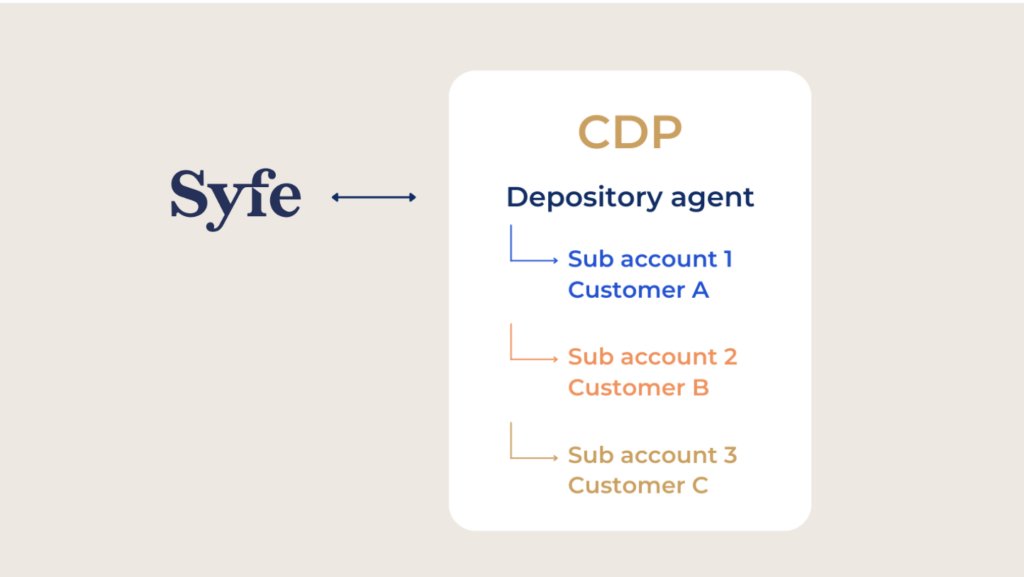
In the unlikely event that Syfe or our CDP-approved depository agent ceases operations, your investment holdings will not be affected as they are held on trust for you. They will be returned to the investors or transferred to another agent. Syfe’s depository agent will ensure that all liabilities and obligations to all clients are fully discharged or provided for, and that proper arrangements have been put in place. In short, you remain the rightful owner of the shares that are in the CDP.
Since its inception, Syfe has placed the safety of our customers at the center of what we do. We are regulated by the MAS and licensed under the CMS license No. CMS100837 for retail fund management after meeting all stringent standards set by MAS for financial and investment services companies. With this, investors can rest assured that every dollar invested through Syfe, is protected and safeguarded, as we work together with key partners such as the CDP to meet the highest safety standards for your money.
Quick Takeaways
- CDP vs Custodian comparison is mainly about how SGX securities are held: direct in your name (CDP) versus nominee/depository agent holding (custody), with you as the beneficial owner under custody.
- Custodian structures are common because they can simplify day-to-day investing and support multi-market portfolios.
- Corporate actions and shareholder participation are typically broker-mediated under custody, and processes and deadlines may vary by platform.
- Syfe Brokerage uses a custody-led structure for SGX holdings, with SGX shares held in custody by CDP in a segregated custodian account.
Conclusion
In Singapore, choosing between a CDP account and a custodian account is not just an administrative detail—it shapes how your SGX holdings are recorded, how corporate actions are handled, and how easily you can change providers later. A CDP (direct holding) securities account may suit investors who want SGX holdings recorded under their name and prefer a portable holding layer that remains separate from any single broker. A custodian (broker custody) structure may suit investors who prioritise a more streamlined experience, consolidated reporting, and a single platform to invest across Singapore and overseas markets.
A practical next step is to map this decision to your first-year investing plan: what you intend to buy (SGX only or global), how often you expect to transact, and whether switching providers is likely. With those priorities defined, you can choose the structure that supports your investing habits—and makes it easier to stay consistent over the long term.
Frequently Asked Questions (FAQs)
1) What Is A CDP Account?
A CDP securities account is commonly used to hold SGX-listed securities directly in your name. CDP also supports sub-account arrangements maintained by depository agents for custody-based holdings.
2) What are CDP account requirements in Singapore?
Common baseline requirements include being at least 18 years old, not being an undischarged bankrupt, and having an eligible bank account for crediting arrangements (details vary by application route).
3) CDP Vs Custodian: Which Is Better For Beginners?
For many beginners, a custodian account can be more straightforward operationally because trading, reporting, and administration are typically consolidated in one platform. A CDP direct setup may be preferred if SGX holdings recorded under your name and portability across CDP-linked brokers are primary priorities.
4) Can I Transfer Shares To Broker Custody From A CDP Account?
Transfers are generally possible, but the process can involve forms, timing considerations, and fees. It is usually advisable to avoid transferring during unsettled trades or ongoing corporate actions, and to confirm transfer minimums in advance.
5) How do I decide whether a CDP account or custodian account suits me?
Start with your investing habits. If you mainly buy and hold Singapore-listed shares and want flexibility to change brokers later, a CDP account can be a practical foundation. If you prefer a single platform for both Singapore and overseas markets, trade more frequently, or prioritise convenience and consolidated reporting, a custodian account may be a better fit.


You must be logged in to post a comment.