


Singapore has strategically positioned itself as a leading hub for healthcare innovation in Asia. This leadership is driven by significant and sustained government investment, a forward-thinking regulatory environment, and the deep integration of artificial intelligence (AI) and digital technologies across the healthcare spectrum.
The ecosystem is characterised by robust public-private partnerships, world-class research institutions, and a clear focus on addressing the dual challenges of an aging population and rising healthcare costs.
This article examines the current landscape, market dynamics, key growth drivers, and challenges in this rapidly evolving market.
The Current State of Healthcare Innovation in Singapore
Singapore’s healthcare innovation landscape is a thriving ecosystem that successfully integrates advanced research, clinical implementation, and commercial application. The country has moved beyond basic digital health records to incorporate sophisticated AI technologies, precision medicine, and medical robotics.
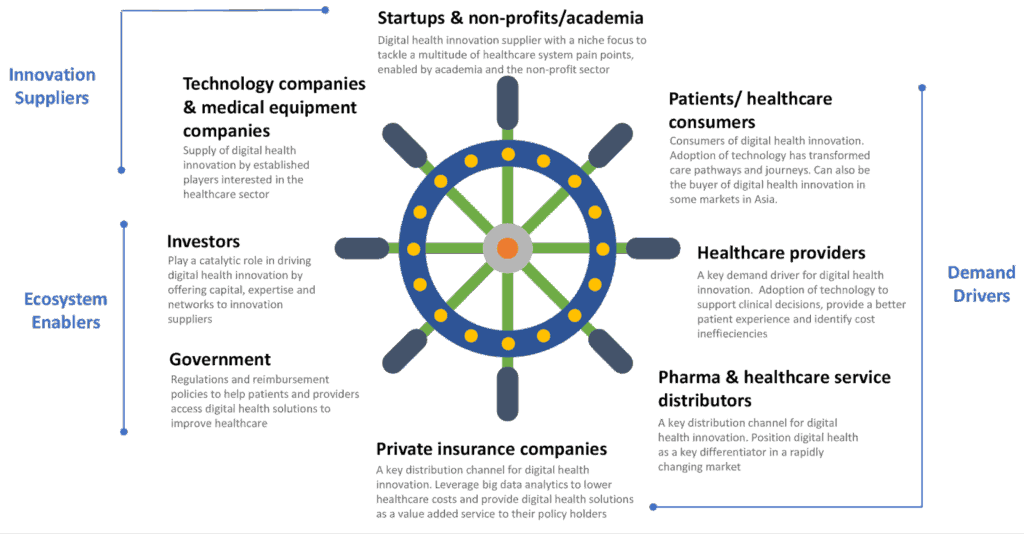
Source: Scaling Digital Health Innovation in Asia by ACCESS and EDB Singapore
AI Integration in Clinical Settings
Institutions are implementing cutting-edge AI applications that transform patient care. The National Heart Centre Singapore’s “Cardiovascular Ageing and Longevity programme” uses AI tools including smart autonomous monitoring stations and 3D gait analysis for early intervention. The upcoming NUHS Digestive Health Centre will implement a triple AI system for computer-aided detection, diagnosis, and quality control.
Below is a chart that summarised key AI roles and responsibilities across the medtech value chain:
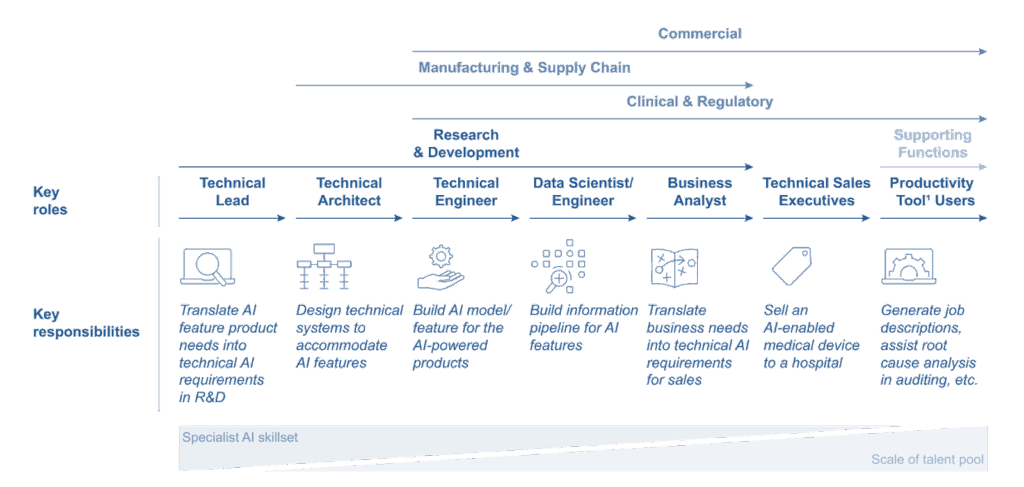
Source: Industry participant interviews; Bain analysis
Institutional Research Infrastructure
Specialised research centres like the “AI Medical Centre” established in 2024 under NTU’s LKC Medicine focus on mental health, aging diseases, and cancer screening. These institutions accelerate the translation of research into clinical practice.
Precision Medicine Initiatives
Singapore leverages its unique demographic position as a microcosm of Asia’s genetic diversity. The National Precision Medicine Program and SG100K project are building the region’s most comprehensive clinical and genomic database. The TRUST platform enables secure public-private data sharing, positioning Singapore as an ideal testbed for developing precision medicine solutions applicable throughout Asia.
Singapore’s healthcare innovation sector is a strategic component of the country’s knowledge-based economy. Below is a table summarised Singapore’s Healthcare Innovation Positioning in Asia:
| Aspect | Singapore’s Position | Regional Competitors |
| Market Size | Medical technology sector generates >S$19 billion annually | China leads medical X-ray market growth, followed by India, Japan |
| AI Talent Pool | Targeting 15,000 AI professionals through National AI Strategy | Asia-Pacific has only 10% of MedTech professionals with combined healthcare and AI skills |
| Global Company Presence | 30+ global MedTech giants with regional HQs, 20+ multinational R&D centers | Varies by country with China and Japan having significant but less concentrated presence |
| Government Investment | S$28 billion for RIE2025 plan, S$1 billion for National AI Strategy | Other Southeast Asian countries investing but at significantly lower levels |
Source: NAIS 2.0 and RIE2025
Regional Competitive Positioning
Singapore has established a distinct niche within Asia’s healthcare innovation landscape, differentiating itself through quality, intellectual property protection, and regulatory efficiency rather than competing solely on cost.
By 2027, Singapore’s medical X-ray market is forecasted to achieve a growth rate of 5.96%, positioning it behind China and India in absolute market size but ahead of Japan, Australia, and South Korea in growth momentum. This growth is fuelled by continuous healthcare infrastructure investments,
Key Economic Contributor
The healthcare sector has become a significant contributor to Singapore’s economy, with the medical technology sector generating over S$19 billion annually. AI, including in healthcare, is identified as a key factor in maintaining Singapore’s medium-term GDP growth of approximately 3%. The government is actively refreshing its economic blueprint to seize opportunities in such high-growth areas.
Key Beneficiaries
A developed systematic framework for identifying promising small to mid-cap companies positioned to benefit from Singapore’s healthcare innovation investments. Companies matching the following profiles represent strong candidates:
AI-MedTech Integration Specialists
Firms developing specialised AI solutions that streamline clinical workflows or address operational pain points in healthcare settings represent attractive opportunities. Companies with proprietary algorithms trained on diverse Asian clinical datasets hold a competitive advantage in regional markets. Examples mentioned in search results include KroniKare, which offers an AI-driven wound assessment system, and NDR Medical Technology, which developed an automated needle-guidance platform. These firms benefit from multiple structural tailwinds such as government funding for AI adoption, rising provider demand for efficiency-enhancing technologies, and the broader push to standardise care quality. Within a healthcare equities universe, companies with validated technology deployed in pilot programs with major healthcare institutions typically demonstrate lower commercialisation risk and stronger long-term adoption potential.
Precision Medicine Enablers
Companies operating within the genomic and precision-medicine ecosystem also present strong prospects, particularly those offering genetic sequencing, bioinformatics, or tools that enable the clinical use of genomic data. National initiatives such as Singapore’s Precision Medicine Program and the SG100K project have created substantial research infrastructure and high-value datasets, opening opportunities for firms positioned to deliver complementary diagnostics or computational genomics solutions. Businesses with capabilities in analysing Asian genetic variants or integrating genomic insights into clinical workflows are especially well-aligned with emerging demand. Entities that maintain strategic partnerships with leading research institutions tend to benefit from privileged access to datasets, translational research opportunities, and early proof-of-concept deployments.
Aging Population Solution Providers
Firms delivering technology-enabled solutions for elderly care are well-aligned with Singapore’s demographic priorities, given the structural rise in aging-related healthcare needs. High-potential segments include remote physiological monitoring, fall-detection systems, medication adherence platforms, and chronic-disease management tools tailored for older adults. Solutions such as the “Sonic Eye Lasso” fall-monitoring device illustrate innovation momentum in this category. When assessing companies within this space, preference generally falls on those whose products are compatible with national healthcare financing frameworks or eligible for public-sector subsidy schemes, as these factors materially influence adoption rates and market penetration.
Leveraging the framework for identifying companies positioned to benefit from Singapore’s healthcare innovation investments, 5 promising small-to-mid cap companies have been shortlisted. These companies align with the key growth drivers of AI integration, precision medicine, and solutions for an aging population:
Q & M Dental Group (SGX: QC7)
Q&M is an AI-enhanced diagnostics leader. The Company has a proven track record of integrating AI into clinical practice. Through its subsidiary EM2AI, it has deployed an AI model across its clinics in Singapore and Malaysia that assists dentists in reviewing X-ray images, detecting diseases, and recommending treatment plans. This aligns directly with the national push for AI-powered diagnostics.
Q&M operates a scalable platform for elderly care. As a large dental group with an extensive network, Q&M is well-positioned to address the oral health needs of Singapore’s aging population, a segment that requires frequent and specialised dental care, creating a stable, recurring revenue stream.
Q&M Dental Group Financial Overview
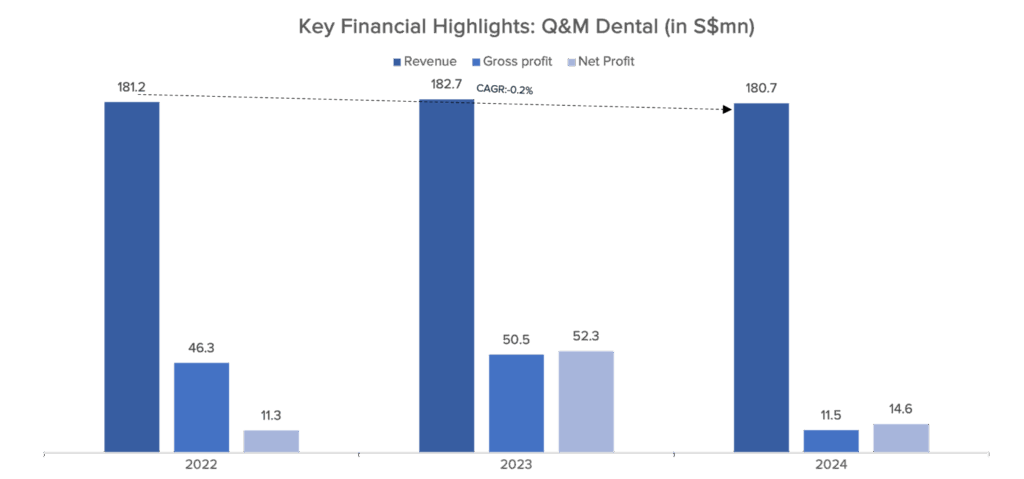
Source: Company disclosures
UG Healthcare (SGX: 8K7)
As a leading manufacturer of examination gloves, UG Healthcare is a fundamental beneficiary of increased healthcare utilisation driven by an aging population and expanding clinical services. Its products are essential consumables across the entire healthcare ecosystem.
The company’s focus on manufacturing efficiency and cost control positions it well to compete in a market with cost containment pressures. Its ability to provide high-quality, affordable supplies is crucial for healthcare providers navigating budget constraints, with operational excellence and cost leadership.
UG Healthcare Financial Overview
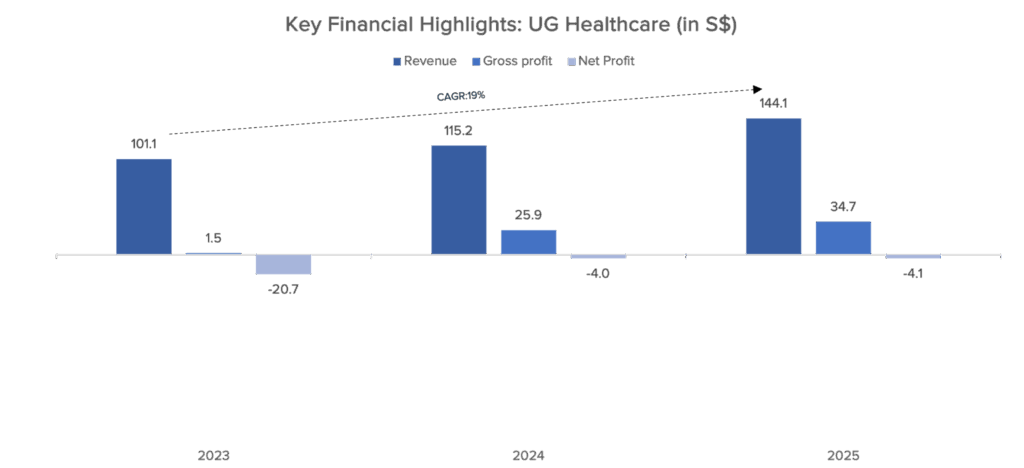
Source: Company disclosures
Hyphens Pharma (SGX: 1J5)
Hyphens Pharma has a focused portfolio in specialty pharma and consumer healthcare, including dermatology and rare diseases. This “beyond-the-pill” approach, which often involves specialist education and patient support, aligns with precision medicine and targeted therapeutic areas.
Hyphens Pharma has strong strategic partnerships and distributions. The company has a decent track record of in-licensing and distributing international brands in Southeast Asia. This makes it an attractive partner for global biotech and pharma companies looking to access the region, benefiting from the cross-border innovation flows Singapore fosters.
Hyphens Pharma Financial Overview
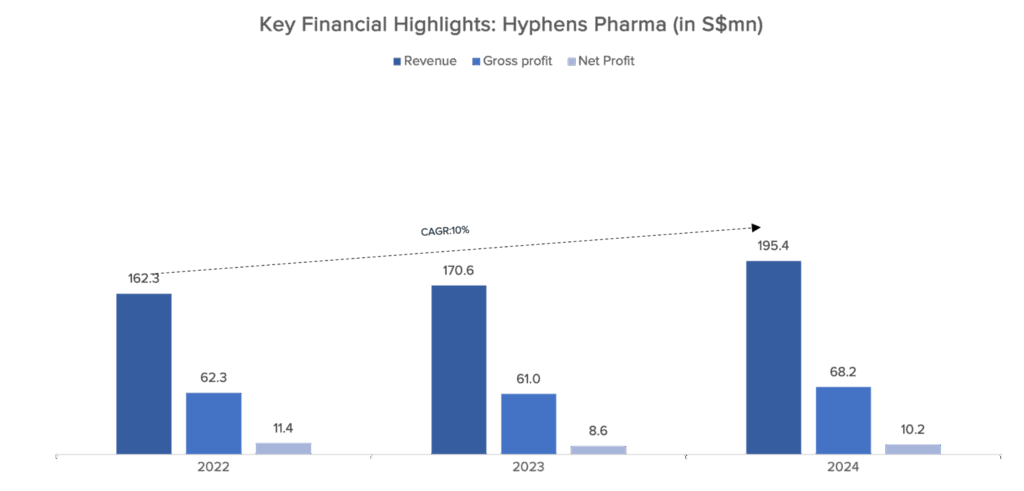
Source: Company disclosures
Clearbridge Health (SGX: 1H3)
Clearbridge Health operates a network of medical clinics and diagnostic laboratories with a strong focus on early disease detection and genomic tests. This positions it at the heart of the precision medicine ecosystem, directly benefiting from initiatives like the National Precision Medicine Program.
Clearbridge Health operates via an Integrated Care Model. By combining diagnostics with primary and specialist care, the company offers an integrated healthcare solution. This model is increasingly valuable for managing chronic diseases in an aging population, promoting early intervention and continuous care outside of hospitals.
Clearbridge Health Financial Overview
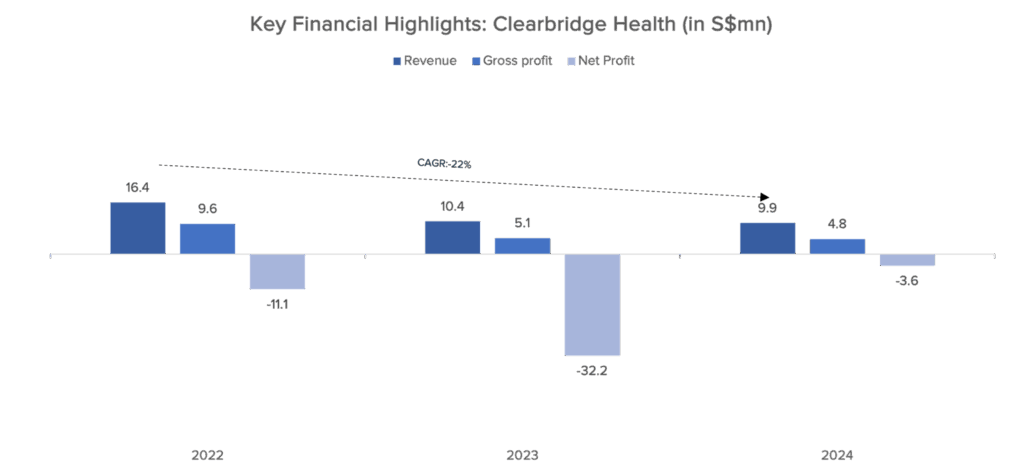
Source: Company disclosures
Medtecs International (SGX: 546)
Medtecs is a provider of essential protective gear. As a manufacturer and supplier of medical consumables like personal protective equipment (PPE) and single-use devices, Medtecs is a direct beneficiary of the baseline growth in healthcare demand driven by an aging population and expanding healthcare infrastructure.
The Company mainly focuses on cost-effective solutions. In an environment with significant cost containment pressures, providers are increasingly seeking reliable and affordable medical supplies. Medtecs’ position in this essential, cost-conscious segment of the market provides a defensive and stable growth profile aligned with the healthcare system’s financial sustainability goals.
Medtecs International Financial Overview
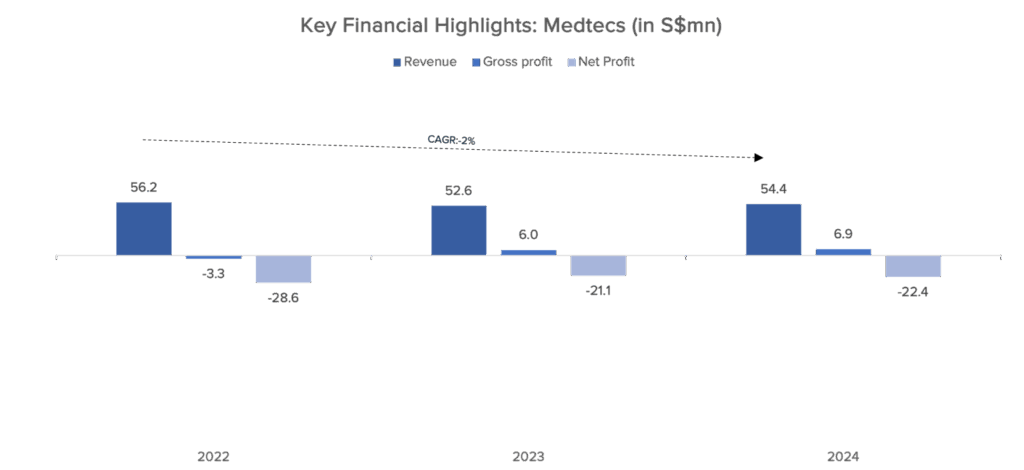
Source: Company disclosures
Trends to Watch
Several powerful trends are shaping the trajectory of healthcare innovation in Singapore, creating opportunities for companies that can effectively address evolving needs and priorities.
AI Integration Acceleration
The healthcare sector is experiencing rapid AI adoption across diverse applications, moving beyond pilot projects to integrated clinical workflows.
Singapore’s government is actively promoting this trend through funding and policy support, including the S$200 million commitments to implement AI technologies in healthcare institutions. Notable applications include AI-assisted medical imaging that halves the time required to generate radiology reports, and chronic kidney disease deterioration risk prediction models that analyze patient data to categorise diabetes patients into risk categories, enabling targeted interventions.
As these technologies demonstrate clinical and operational benefits, adoption is expected to accelerate further, creating opportunities for both solution developers and implementing organisations.
Aging Population Dynamics
Singapore faces significant demographic pressures from its rapidly aging population, with citizens living beyond 83 years on average. This demographic shift drives increased prevalence of chronic conditions and creates demand for innovative care models, medical devices, and pharmaceutical products tailored to older adults.
The government’s healthcare expenditure has grown substantially, projected to approach S$39 billion by 2030, with a significant portion directed toward aging-related health challenges. This trend creates opportunities across multiple domains including remote patient monitoring, chronic disease management, mobility aids, and cognitive health solutions that can improve care quality while managing costs in an environment of growing demand.
Consumer-Centric Healthcare Models
A shift toward consumer-directed health is creating opportunities for innovations that engage patients directly rather than operating solely through healthcare provider channels. Examples include physiological measurement software developed by Nervotec that uses smartphone or laptop cameras to read blood pressure, heart rate, respiration rate, and hemoglobin levels within one minute, enabling convenient self-monitoring. This trend is particularly pronounced in preventive health and chronic disease management, where sustained engagement outside clinical settings drives improved outcomes.
Challenges in the Healthcare Innovation Sector
Despite the favourable environment for healthcare innovation in Singapore, several significant challenges could impact growth trajectories and investment returns for companies operating in this sector.
Cost Containment
Singapore’s healthcare system faces ongoing tension between adopting innovative technologies and managing expenditures, with healthcare costs consistently rising faster than general inflation. Cost pressures stem from multiple sources including wage increases in the labour-intensive healthcare sector, aging population demands, and expensive new treatments and technologies.
These pressures create potential headwinds for higher-cost innovations, particularly those with modest incremental benefits compared to existing alternatives. Companies with solutions that demonstrably reduce total cost of care while maintaining or improving quality are better positioned to overcome reimbursement hurdles than those that simply add cost to the system.
Talent Acquisition
The specialised nature of healthcare innovation creates workforce challenges, particularly for smaller companies competing with both established healthcare providers and technology giants. Across the Asia-Pacific region, only about 10% of medical technology professionals possess combined healthcare and AI skills, creating intense competition for limited talent.
While Singapore has implemented initiatives like the AI Apprenticeship Program and partnerships with IBM and polytechnics to develop relevant skills, the supply of qualified professionals may continue to lag behind demand as the sector expands. This dynamic could drive up labor costs and potentially constrain growth for companies unable to offer competitive compensation packages compared to well-funded multinational corporations or government agencies.
Implementation and Integration
Even with compelling technology and adequate funding, healthcare innovation faces significant adoption barriers related to workflow integration, staff training, and interoperability with existing systems. Healthcare providers face real-world constraints including clinical workflow disruption, change management challenges, and potential cybersecurity vulnerabilities introduced by new technologies.
Additionally, the presence of insurance can sometimes drive unnecessary utilisation and over-servicing, creating potential resistance to innovations that might further increase utilisation without demonstrating clear medical benefit. Companies with comprehensive implementation support, strong clinical evidence, and adaptable interfaces that minimise workflow disruption are better positioned to overcome these adoption barriers.
Invest in the healthcare industry and capitalise on its growth with Syfe’s Thematic portfolios. Get diversified exposure to pharma, genomics, biotech and more in one portfolio, and capture the rising demand for healthcare globally with large-cap, highly liquid ETFs.
Access the full report here.


You must be logged in to post a comment.