

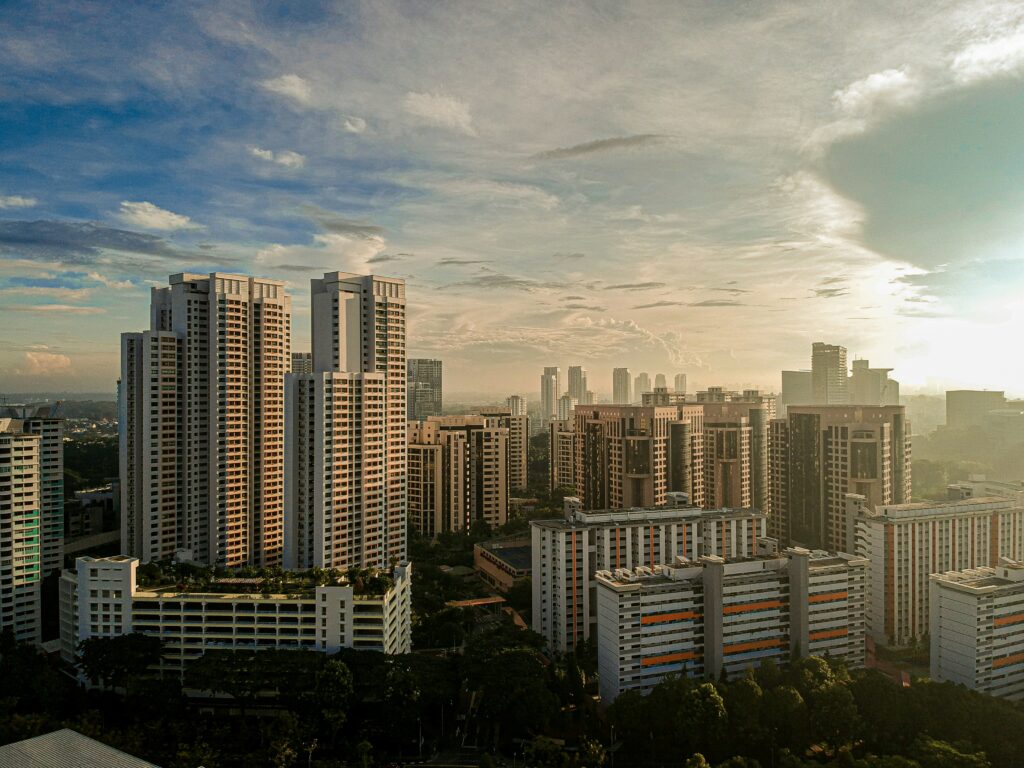
Used strategically, your property can be a powerful retirement asset. From downsizing and renting out spare rooms to decoupling, here are the property strategies Singapore homeowners can consider to turn their homes into a source of retirement income without necessarily giving up homeownership.
Is your home your biggest untapped retirement asset? For many Singaporeans, their property is more than just a roof over their heads. It is also likely to be one of their most valuable assets, representing decades of mortgage repayments, savings and capital appreciation.
Yet, as retirement approaches, homeowners can find themselves in an unusual position: asset-rich but cash-poor. A substantial proportion of their wealth may be tied up in their HDB flat, condominium or landed property, while their monthly retirement income may not comfortably cover everyday expenses, healthcare costs and lifestyle aspirations.
The good news is that selling your home is not the only way to unlock its value.
Singapore homeowners have several options to monetise their property while maintaining some degree of homeownership and lifestyle continuity. These include downsizing, renting out spare rooms or entire properties, participating in the HDB Lease Buyback Scheme (LBS), and exploring home equity financing.
For private property owners, decoupling may also form part of a broader property and retirement planning strategy.
However, each approach comes with different financial implications, eligibility requirements and trade-offs. Understanding which option best matches your retirement needs is essential.
Why Unlock Home Equity for Retirement?
Home equity is the difference between your property’s current market value and any outstanding mortgage or secured debt.
For example, a fully paid-up condominium represents substantial wealth. However, unless the owner sells, rents out the property or accesses a suitable financing arrangement, much of that wealth remains inaccessible for everyday spending.
Unlocking home equity can help retirees or those approaching retirement:
- Supplement monthly retirement income.
- Strengthen CPF LIFE payouts.
- Fund healthcare and long-term care expenses.
- Reduce financial pressure on adult children.
- Maintain a comfortable lifestyle without relying entirely on cash savings.
The objective is not necessarily to extract as much money as possible from the property, but to find a sustainable balance between maintaining a home, safeguarding financial security and having sufficient liquidity throughout retirement.
Ways to Unlock Home Equity
Downsizing: Turning a Bigger Home into Retirement Cash
For HDB homeowners, right-sizing is one of the most straightforward ways to unlock property wealth.
The strategy involves selling a larger property, such as a four- or five-room flat, and purchasing a smaller, more affordable home, such as a two-room Flexi or three-room flat.
The difference between the sale proceeds and the cost of the replacement home, after accounting for outstanding loans, CPF refunds, transaction costs and other expenses, can potentially be retained as cash.
For example, a couple selling a larger HDB flat for S$750,000 and purchasing a smaller property for S$400,000 could potentially release a meaningful amount of capital for retirement.
The actual cash proceeds will depend on their outstanding mortgage, CPF usage and purchase costs.
The advantages: Downsizing can reduce monthly household expenses, property maintenance costs and the amount of space that needs to be maintained. It also creates an opportunity to move closer to public transport, healthcare facilities or family members.
The drawbacks: Moving can be emotionally difficult, particularly for homeowners who have spent decades in the same neighbourhood. There may also be renovation, moving and transaction expenses to consider.
However, for retirees who no longer need a large home, right-sizing can be an effective way to convert accumulated property wealth into usable retirement savings.
HDB Lease Buyback Scheme: Monetising Your Flat Without Moving
For eligible senior HDB homeowners who wish to remain in their existing homes, the HDB Lease Buyback Scheme offers another option.
Under the scheme, homeowners sell part of the tail-end lease of their flat to HDB while retaining a lease long enough to cover the youngest owner’s lifespan up to age 95.
The proceeds are used to top up the owners’ CPF Retirement Accounts, helping to increase their future or existing CPF LIFE monthly payouts. Eligible households may also receive an upfront cash bonus of up to S$30,000, depending on flat type and the amount topped up to their CPF Retirement Account.
The scheme is available to eligible households whose owners are aged 65 and above, subject to HDB’s citizenship, property ownership, income and other conditions.
The key advantage is that retirees can continue living in familiar surroundings while converting part of their property’s value into a stream of retirement income.
However, this is not the same as receiving the entire sale proceeds in cash. Much of the money is channelled into CPF, and the retained lease affects the property’s future value and ownership arrangements.
For homeowners who prioritise staying put and securing lifelong income over maximising immediate cash proceeds, the LBS may be worth exploring.
Renting Out Spare Rooms or Your Entire Property
Another way to generate retirement income is to become a landlord.
Rather than selling their property, homeowners can rent out spare bedrooms or, where permitted, their entire home.
For HDB owners, renting out bedrooms allows them to retain their existing living arrangements while earning supplementary monthly income. However, HDB approval and applicable occupancy and registration requirements must be observed.
Renting out an entire HDB flat is subject to additional restrictions, including citizenship and Minimum Occupation Period (MOP) requirements. Singapore Permanent Resident flat owners cannot rent out their entire flat, while owners of Plus and Prime flats are also subject to restrictions.
Private property owners generally have greater flexibility to rent out individual rooms or their entire property, subject to applicable regulations and contractual obligations.
Renting out rooms offers a useful middle ground. Homeowners can remain in their homes and receive additional income without giving up their established lifestyle.
However, this may come with reduced privacy, tenant-management responsibilities and the need to share common spaces.
Criteria to note when renting out bedrooms:
- Only bedrooms in HDB flats with at least three rooms can be rented out.
- Prior HDB approval is required.
- The owners and authorised occupants must continue living in the flat.
- Applicable occupancy limits must be observed.
Renting out the entire property can generate higher rental income, particularly if the owner relocates to a smaller, less expensive home or moves in with family.
The trade-off is that homeowners must find alternative accommodation, and handle rental expenses, property maintenance, and face potential changes in market conditions.
Criteria to note for renting out the entire HDB flat:
- Only Singapore Citizens can rent out their entire HDB flat. Singapore Permanent Residents (SPRs) are not allowed to rent out the whole unit, regardless of how long they have owned it.
- The applicable MOP must be fulfilled.
- Plus and Prime flat owners cannot rent out their entire flats, even after their 10-year MOP.
- Prior HDB approval is required.
Which Home Equity Option is Suitable For You?
There is no universally correct property strategy for retirement.
Downsizing may be suitable for homeowners who want immediate access to capital and lower living expenses. Renting can generate recurring income without requiring an outright sale. The Lease Buyback Scheme offers eligible HDB seniors a way to remain in their homes while enhancing CPF LIFE payouts.
Meanwhile, home equity financing may appeal to private homeowners who wish to retain their property but need additional retirement income.
Beyond the numbers, emotional considerations may also play a part in your decision. A family home may hold decades of memories, making the prospect of moving difficult. Furthermore, some retirees may prefer not to share their living space with tenants.
Before making a decision, homeowners should assess your expected retirement expenses and healthcare needs, existing cash reserves, property value, CPF balances and long-term housing preferences. Also, consider how your chosen strategy might affect your spouse and children, particularly when planning for inheritance and future housing security.
Beyond Property: Building a Diversified Retirement Portfolio
While property can be an important pillar of retirement wealth, relying too heavily on a single asset class can leave homeowners financially exposed. Property is relatively illiquid, and its value can fluctuate with market conditions. Rental income is also subject to vacancies, maintenance expenses and changing tenant demand.
For retirees, diversifying beyond physical property can provide another layer of financial flexibility.
Rather than concentrating most of their wealth in a single residential property, homeowners can consider allocating a portion of their savings or property sale proceeds to a diversified investment portfolio. One option is to explore professionally managed portfolios through digital wealth platforms.
For retirees looking to supplement their income, Syfe’s Income+ portfolios offer exposure to diversified fixed-income investments, with different strategies designed around income generation and risk preferences. Income+ Defensive focuses on investment-grade bonds and relatively lower risk, while Income+ Enhance targets higher income potential alongside capital appreciation, with correspondingly greater credit risk. Income+ Max offers a multi-asset approach combining equities, fixed income and gold for investors comfortable with higher market risk.
For those with a longer investment horizon, Syfe’s Core portfolios offer globally diversified exposure to asset classes such as equities, bonds and gold, providing another avenue for building wealth beyond residential properties in Singapore.
This approach can help create additional sources of potential returns and income without having to purchase another physical asset or rely on rental income or property appreciation. Depending on the portfolio and market conditions, investments may also provide greater liquidity than physical property.
Ultimately, the objective is to create a more balanced retirement portfolio that includes property and financial investments working side by side to provide growth, diversification and flexibility. The right approach depends on how much liquidity you need and how much financial risk you are comfortable taking.
As with any investment, returns are not guaranteed, and portfolios can experience losses. Retirees should consider their investment horizon, risk tolerance, liquidity requirements and income needs before investing.
Conclusion
Retirement security is not just about owning a valuable property. It is about building a balanced portfolio of assets that can provide financial flexibility, support your desired lifestyle and sustain you through the different stages of retirement.
Thinking about how to make your property work harder for retirement? Unlocking home equity is just one part of the equation. Syfe’s range of managed portfolios offers more opportunities for growth and income. Discover how they can complement your retirement plans today.
Read More:
- How to Reduce Property Tax in Singapore
Property vs. Equities: Why Singaporeans Still Prefer Real Estate — And What Investors Should Focus On - How to Pick Resilient REITs in Singapore’s Property Market Recovery
- Common Passive Income Mistakes Singaporeans Make — and How to Avoid Them
- Mortgage Loan Singapore Guide: How to Choose, Apply, and Plan Your Finances


