

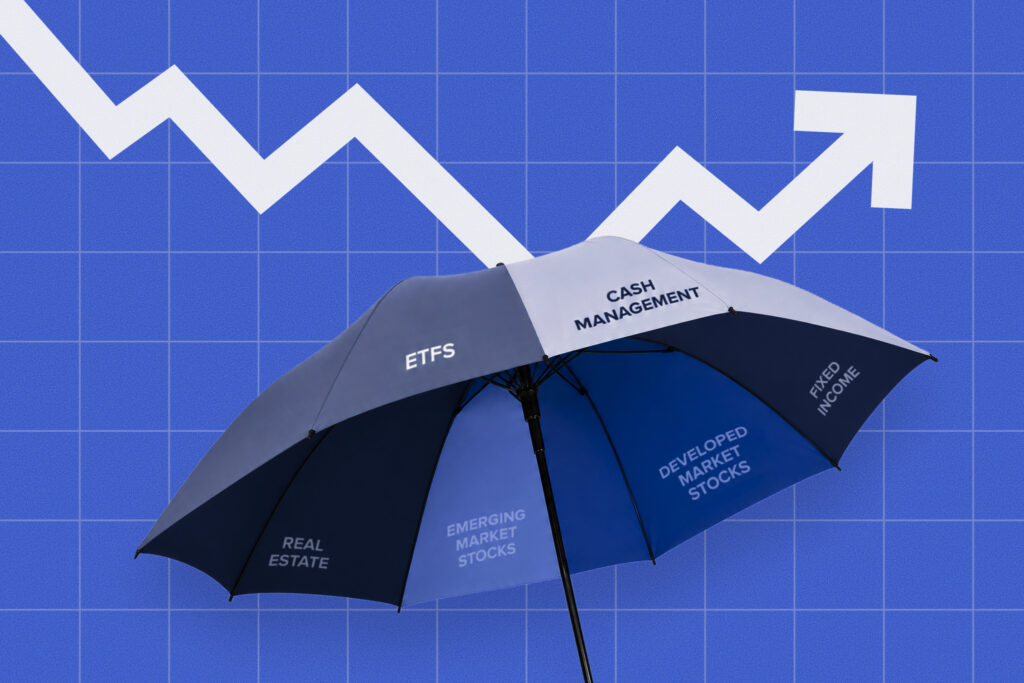
Diversification remains your best strategy. Here’s what to do when equities plunge.
Market pullbacks can happen for many reasons—stronger-than-expected economic data, shifts in interest rate expectations, sector sell-offs, or geopolitical tensions. Recent market volatility, driven by a combination of these factors, serves as a timely reminder that uncertainty is a normal part of investing.
Rather than trying to predict every market move, investors are often better served by focusing on two principles: discipline and diversification.
So when markets become volatile, what should investors do? The answer is often less about reacting to the latest headline and more about staying disciplined, maintaining diversification, and keeping sight of long-term objectives.
How Should Investors Respond to Market Volatility?
Sharp market pullbacks can feel unsettling, especially when they follow periods of strong gains.
While the headlines may feel alarming, periods like these are part and parcel of the market cycle. Market corrections occur regularly, even during long-term bull markets. Historically, equities have recovered from temporary setbacks and gone on to reach new highs over time.
The challenge for investors isn’t predicting every market move, but staying disciplined and diversified is your best strategy. In a related podcast with The Business Times, Ritesh Ganeriwal, Head of Investment Advisory at Syfe, explains the difference between market noise and market signals, and how investors should assess the signs rationally instead letting emotions come into play.
Discipline
- Stay Focused on Your Long-Term Plan
Reacting emotionally is one of the most common mistakes investors make during a market decline.
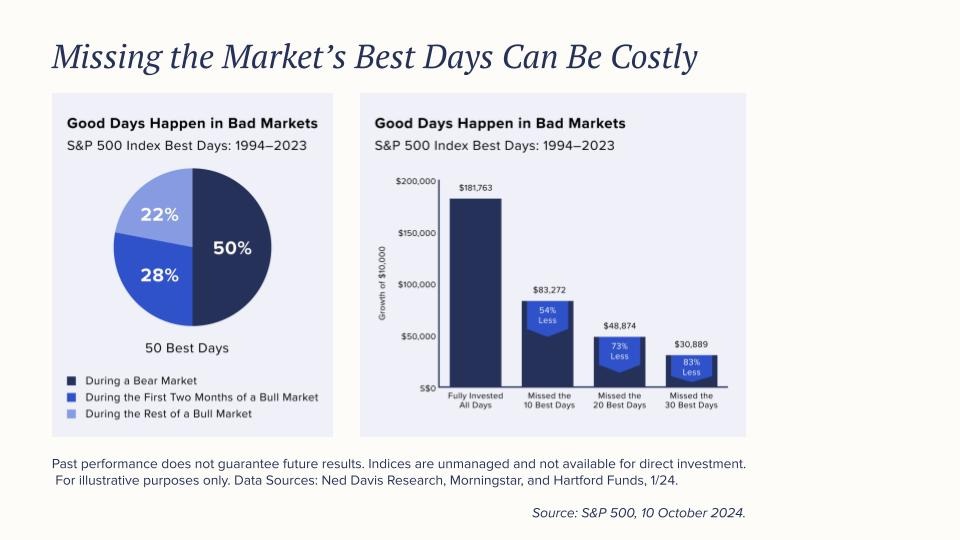
Selling investments after prices have already fallen can lock in losses and make it harder to participate in the eventual recovery. Some of the market’s strongest gains often occur shortly after periods of sharp declines.
For example, in April 2025, the S&P 500 plunged over 10% for the first two days of the week after Liberation Day — one of the worst two-day declines ever — but was then followed by a gain of over 9.5% in a day, the third-best day since World War II. LPL Financial Portfolio Strategist George Smith found—after studying market cycles since Pearl Harbour—that stocks recover to pre-crisis levels within a matter of weeks. On average, it takes the S&P 500 less than 39 days to recover to its previous all-time highs following a market correction or drop.
Missing just a handful of those recovery days can significantly impact long-term returns.
Instead of focusing on short-term market movements, ask yourself these instead:
- Are your financial goals still the same?
- Has your investment horizon changed?
- Has your ability to tolerate risk materially shifted?
If the answer is no, then market volatility may not require any major action.
- Dollar-Cost Average
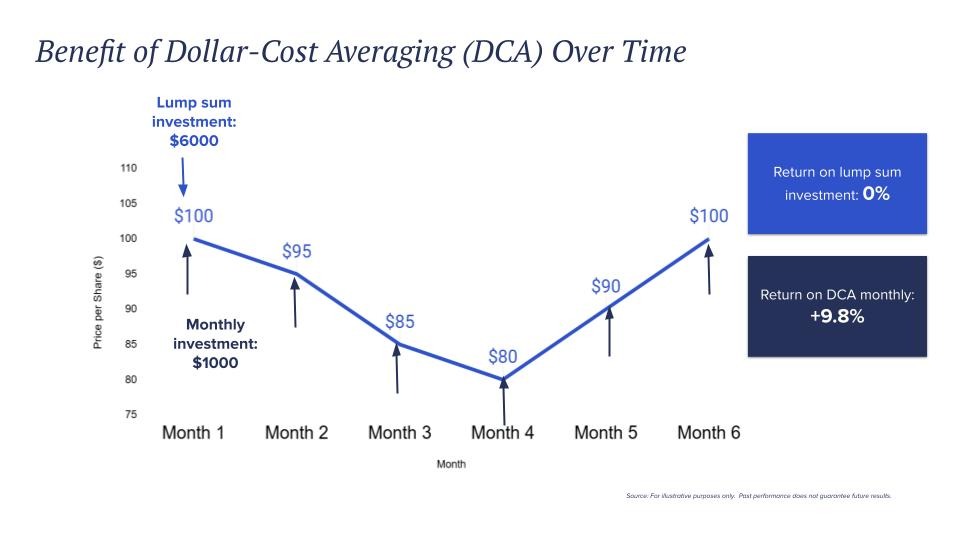
For investors making regular contributions, market declines can even create opportunities. Continuing to invest through dollar-cost averaging (DCA) allows you to accumulate more shares when prices are lower, potentially improving long-term returns when markets recover.
It’s also important to maintain an adequate emergency fund. Having sufficient cash reserves reduces the likelihood of needing to sell investments during periods of market stress to meet unexpected expenses.
- Rebalance Your Portfolio Regularly
Rebalancing is the process of restoring your portfolio to its intended asset allocation after market movements cause it to drift.
Consider a simple example:
An original portfolio comprises 50% stocks ($5,000) and 50% bonds: ($5,000). The total portfolio value is $10,000.
Suppose stocks fall by 40% after a market decline. Now, the total portfolio value stands at $8,000, with $3,000 (37.5%) in stocks and $5,000 (62.5%) in bonds. The allocation has now shifted and your portfolio has become significantly more conservative than originally intended even though you didn’t make any trades.
A rebalance might involve:
- Selling a portion of bonds that have held their value.
- Using the proceeds to purchase equities at lower prices.
- Restoring the portfolio back to its target allocation.
This process encourages investors to systematically “buy low and sell high” rather than reacting emotionally to market movements. Regular rebalancing also helps ensure that portfolio risk remains aligned with long-term investment objectives.
Diversification
Market downturns are a timely reminder that diversification is not just about owning more investments—it’s about diversifying across different drivers of return. A well-diversified portfolio can help reduce concentration risk and improve resilience across market cycles.
Diversify by Asset Class
Different asset classes tend to perform differently under varying economic conditions, helping to cushion the impact of market volatility.
- Fixed Income: Government and high-quality corporate bonds can provide stability, regular income, and have historically helped offset equity market volatility.
- Gold: Often viewed as a defensive asset during periods of market stress, gold can serve as a useful portfolio diversifier.
- Real Estate: Property investments and REITs offer exposure to income-generating assets and a return profile that differs from traditional equities.
- Cash and Cash Management Solutions: Maintaining adequate liquidity provides flexibility to capture opportunities during market declines while reducing the need to sell long-term investments during volatile periods.
Diversify by Geography
Many portfolios remain heavily concentrated in US equities. While the US continues to be the world’s largest equity market, investors may benefit from broader global exposure, including:
- Developed international markets
- Emerging markets
- Regional opportunities across Asia and Europe
Geographic diversification helps reduce reliance on a single economy, market, or policy environment.
Diversify by Sector
Market leadership can shift over time. While technology has been a major driver of returns in recent years, concentrating too heavily in one sector can increase portfolio risk.
Broadening exposure across sectors such as healthcare, consumer staples, utilities, industrials, and financials can help reduce dependence on a single market theme and create a more balanced portfolio.
Diversify by Source of Returns
True diversification also means accessing different sources of return rather than relying on a small group of companies or investment themes.
- Broad Market Funds: Index funds and diversified ETFs provide exposure to hundreds or even thousands of companies, reducing company-specific risk.
- Large- and Small-Cap Companies: While mega-cap technology stocks have dominated recent performance, smaller companies can offer distinct growth opportunities and return drivers. A balanced allocation across market capitalisations can improve portfolio resilience across different market environments.
Recent market volatility highlighted how quickly concentration risk can emerge. Diversifying across asset classes, geographies, sectors, and sources of return can help investors build portfolios that are better positioned to navigate uncertainty and participate in long-term growth.
Looking for a professionally managed approach?
Syfe’s Equity Alpha portfolio is an actively managed portfolio that aims to beat the benchmark rather than just mirror it, based on a team of professional portfolio managers and analysts that conducts deep fundamental research to take calculated, concentrated bets in what is known as a Smart Beta strategy. It takes the guesswork out of investing, offers strategic diversification, and doesn’t require investors to manage their portfolios themselves.
Find out more about active versus passive investing in this article.
Conclusion
Periods of volatility in the stock market are inevitable, but they do not have to derail a well-constructed investment plan.
Markets will continue to experience periods of uncertainty. What investors can control is how they prepare for them. A diversified portfolio, combined with disciplined rebalancing and a long-term mindset, remains one of the most effective ways to navigate market turbulence and stay on track toward financial goals.


