

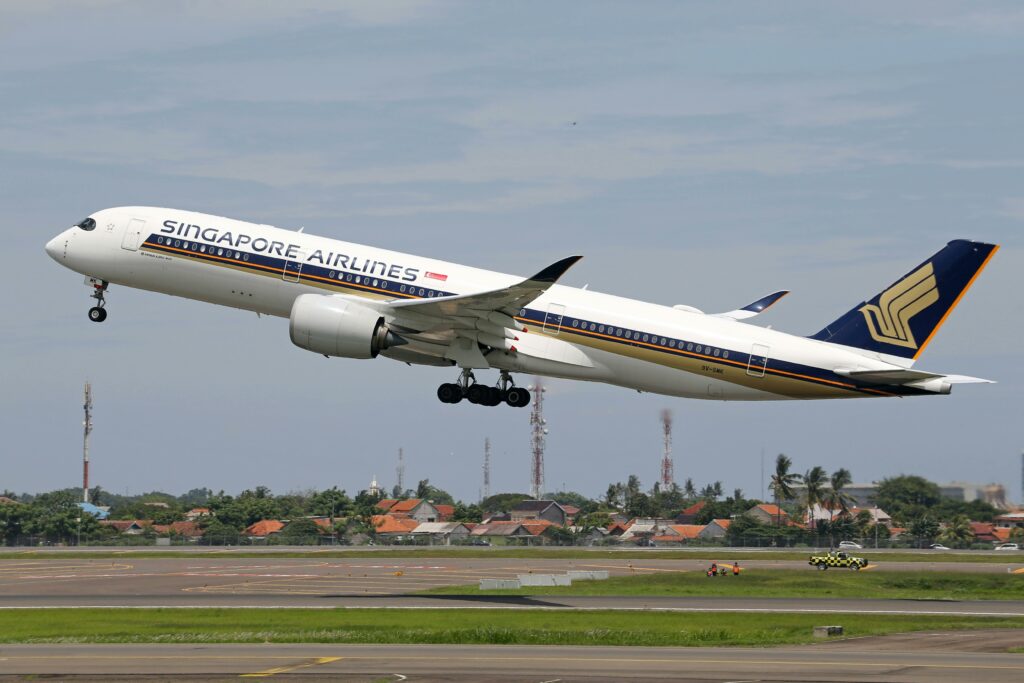
Blue-chip stocks are shares of large, financially stable, and well-established companies that have an established history of proven performance and consistent dividends. These companies are often household names and are typically favoured by investors for their resilience during economic downturns. Blue-chip stocks are therefore usually foundational anchors in diversified portfolios.
In Singapore, giants like Singtel, DBS, ST Engineering, and more are top companies that issue steady dividends and have solid historical growth and trajectory, making them appealing to investors who seek to grow their portfolios beyond common US stocks.
Read on to understand what makes blue-chip stocks so compelling and find out the most popular blue-chip stocks from Singapore.
Table of contents:
- What are Blue-Chip Stocks?
- How to Identify Blue-Chip Stocks? Characteristics of Blue-Chip Companies
- Best Blue-Chip Stocks in Singapore to Build Your Portfolio
- Why Invest in Blue Chip Stock?
- How to Invest in Singapore Blue-Chip Stocks?
What are Blue-Chip Stocks?
Blue-chip stocks are shares of large, financially sound companies with excellent reputations. These established businesses typically have long operating histories and dependable earnings and often distribute dividends to investors.
These companies are typically industry leaders or household names, familiar to consumers and investors alike. In Singapore, this might include companies like CapitaLand, Sembcorp, and even Sheng Siong.
How to Identify Blue-Chip Stocks? Characteristics of Blue-Chip Companies
Blue-chip stocks generally have these few characteristics in common.
Large Market Capitalisation
Market cap refers to the total value of a company, and companies are considered “blue-chip” if they have a market cap of $10 billion or more. Thanks to a large market cap, blue-chip companies have the ability to mitigate fluctuations in a broader market context, bringing them market stability.
Reputation
Blue-chip companies have a long operating history and are usually associated with established companies. Established reputation is a significant factor in their blue-chip status, with notable examples of these companies in Singapore being DBS Bank, Singapore Airlines, and Keppel Corp.
Dividends
Blue-chip stocks usually pay regular dividends to shareholders and increase payouts periodically. While not as high as dedicated dividend stocks, the dividends from blue-chip stocks provide a consistent cash stream for investors and demonstrate their financial stability, making blue-chip stock investments attractive for income-seeking investors.
Stability
Blue-chip companies have weathered a myriad of business and economic challenges to emerge with a track record of consistent revenue and profit growth, making blue-chip stocks more reliable and less vulnerable to market volatility. Stability is a core reason why investors often consider blue-chip stocks Singapore offers as a cornerstone of their portfolios.
Popular Blue-Chip Stocks in Singapore
In Singapore, blue-chip stocks are most closely associated with the constituents of the Straits Times Index (STI).
Although Singapore investors tend to think of banks and REITs investments when researching blue-chip stocks, the STI holds many more strong performers operating across different sectors as shown in the table below.
| Industry | Companies |
| Consumer goods | Sheng Shiong, Thai Beverage |
| Real estate | Capitaland, HongKong Land |
| Transportation | Singapore Airlines, ComfortDelGro |
| Telecommunications | Singtel |
| Financial services | DBS, UOB, OCBC, SGX |
| Industrial | ST Engineering, SATs, Keppel Corporation, Sembcorp |
DBS Group Holdings Ltd (SGX: D05)
A mainstay in many blue-chip equity portfolios, DBS is Southeast Asia’s largest bank that provides services across the region ranging from consumer banking to wealth management and corporate banking.
For the first quarter of financial year 2026, which ended on 31 March 2026, DBS reported a 1% growth in total income year-on-year (YoY) to a record high of S$5.95B, as well as a 1% YoY increase in net profit to S$2.93B.
This robust performance is the result of stronger markets trading income, higher transaction services fees and record wealth management fees. The latter led to a 25% YoY increase to a record S$907M in wealth management fee income. DBS’s strong deposit growth and hedging strategies also helped to offset the decline in net interest income due to lower interest rates.
It stands at the price of S$62.62 (as of 29 May 2026) and offers a 12-month dividend yield of 4.05%.
Singapore Exchange Ltd (SGX: S68)
SGX is Singapore’s national stock exchange operator. It reported a surge in net revenue by 7.6% YoY to S$695.4M for the first half of financial year 2026, ending on 30 June. It also saw an adjusted net profit of 11.6% YoY to S$357.1M in the same period.
The growth was mainly driven by stronger market sentiment, which led to a 16.2% YoY increase in equities-cash net revenue.
SGX’s fixed income, currencies and commodities (FICC) net revenue also rose by 12.5% YoY to S$178.9M, as a result of higher trading volume in commodities and currency derivatives.
For FY2026, SGX expects 6–8% organic top-line growth, and S$90–S$95M in capex. It remains confident that it will maintain its 0.25 cent quarterly dividend increase through FY2028.
It stands at the price of S$21.59 (as of 29 May 2026) and offers a 12-month dividend yield of 2.01%.
Singapore Technologies Engineering Ltd (SGX: S63)
Singapore Technologies Engineering (STE) is a multinational technology, defence and engineering group with a diverse portfolio of businesses ranging from aerospace to smart city, defence and public security.
In the first quarter of 2026, STE saw an 11% YoY increase in revenue to S$3.26B, partly due to the 15% YoY surge to S$1.32 billion in commercial aerospace revenue.
higher maintenance, repair and overhaul (MRO) activity and nacelle deliveries boosted the commercial aerospace segment, while strong international defence demand and contract wins led to a 7% rise to S$1.41B in its defence and public security segment.
Increasing urbanisation and smart city solutions resulted in an 18% YoY growth in its urban solutions and satcom segment.
It stands at the current price of S$11.23 and has a 12-month dividend yield of 1.60%
Singapore Telecommunications Ltd (SGX: Z74)
Commonly known as Singtel, Singapore Telecommunications is Asia’s leading communications technology group, providing mobile, fibre broadband, and digital services across Singapore and regional associate networks.
For its financial year of 2026, which ended 31 March 2026, Singtel reported a 40% YoY growth in net profit to S$5.61B and an underlying net profit that grew 12% to S$2.7B for the full year. This was driven mainly by regional associates Airtel and AIS and operating companies NCS, Digital InfraCo and Optus.
It stands at the current price of S$4.36 and proposed a final one-tier tax exempt ordinary dividend of 10.3 cents per share. The 12-month dividend yield is 4.20%.
Sheng Siong Group Ltd (SGX: OV8)
Sheng Siong is one of the largest supermarket chains in Singapore providing budget-friendly groceries and essentials for consumers.
For the first quarter of 2026, the group saw a revenue uplift of 12.4% YoY to S$452.8M, as well as an increase in net profit of 12.6% YoY to S$43.4M.
Net cash from operating activities rose 41.5% YoY to S$39.4M. This implies that it has strong cash generation that can support its future expansion plans.
Sheng Siong’s strong Q1 financial performance was mainly driven by contributions from 12 new store openings in FY2025, as well as festive sales during Lunar New Year in February and Hari Raya Puasa in March.
Investments in automation and technology, along with robust demand in groceries to help navigate macroeconomic challenges, also contributed to its performance.
It stands at the current price of S$3.06 and offers a 12-month dividend yield of 2.31%.
Why Invest in Blue Chip Stock?
Proven Stability and Reliability
Blue-chip companies have a proven track record of maintaining stability and withstanding economic fluctuations. Their established business models, strong financial positions, and experienced management teams contribute to their resilience. This makes blue-chip stocks investment attractive for investors seeking long-term, dependable growth.
Consistent Dividend Income
Blue-chip stocks are known for their consistent and often increasing dividend payouts. These regular dividends can provide a predictable income stream, making these stocks well-suited for investors seeking passive income or those focused on generating cash flow from their investments.
Portfolio Diversification
Many blue-chip companies operate across multiple industries and regions, offering investors a degree of built-in diversification. By including blue chip stocks in a portfolio, investors can potentially reduce overall portfolio risk while maintaining the potential for strong returns.
Trusted Brand Value
Blue chip companies are often household names with established reputations and strong brand recognition. This familiarity and trust can provide investors with a sense of confidence, particularly during times of market uncertainty.
International Exposure
Many blue-chip companies have a global presence, with operations and markets extending beyond their home countries. Investing in these companies can offer exposure to international markets and diversification benefits without the need to invest directly in foreign stocks.
Resilience in Economic Downturns
Blue-chip companies have demonstrated resilience during economic downturns and recessions. Their size, financial strength, and established market positions allow them to better weather economic challenges, providing a degree of stability to investment portfolios.
Safety and Security
Blue chip stocks are generally considered safer investments compared to smaller or less established companies. Their strong financials, robust business models, and proven track records contribute to their perceived safety, making them suitable for risk-averse investors seeking long-term growth.
How to Invest in Singapore Blue-Chip Stocks?
Want to start investing in Singapore stocks? The first thing to do would be to open a brokerage account. You can consider a digital broker like Syfe’s Brokerage for low fees and transparent pricing.
You can now trade odd lots on SGX with Syfe, allowing you to buy and sell as few as one share instead of the standard lot size of 100 shares. This is particularly beneficial for investors interested in blue-chip stocks, which often have higher share prices. Trading odd lots makes it easier to invest in these companies, even with a smaller budget, and allows for greater flexibility in building a diversified portfolio.
Trading is easy and secure, and there’s also 24/7 customer support available. Simply download the Syfe app to start building your Singapore blue-chip stock portfolio today.
Disclaimer: This article is for informational purposes only and should not be viewed as financial advice. It is not meant to market any specific investment, or offer or recommend the purchase or sale of any specific security. All forms of investments carry risks, including the risk of losing all of the invested amount. Such activities may not be suitable for everyone. This advertisement has not been reviewed by the Monetary Authority of Singapore.


