


Singapore has firmly established itself as a global leader in the Fintech industry, securing the second position globally in the Fintech sector ranking of the Global Financial Centres Index (GFCI) 38, trailing only after New York.
This strong performance is driven by a stable political and economic environment, advanced digital infrastructure, a population that is both technologically literate and receptive to digital financial solutions, and a proactive regulatory approach that balances innovation with risk mitigation.
The nation’s digital economy, which includes a significant contribution from the finance and insurance sector, remains a crucial engine for growth. According to the Singapore Digital Economy Report 2025, the digital economy contributed 18.6% of Singapore’s GDP in 2024, up from 17.7% in 2023. The finance and insurance sector was identified as the largest contributor to the value gained from digitalisation across key sectors.
Singapore as a Global Fintech Hub
Singapore’s emergence as a global Fintech leader is underpinned by a robust and forward-looking macro backdrop.
The government actively fosters innovation and digitalisation across all sectors, with a particular emphasis on financial services. This conducive environment has attracted significant foreign investment and talent, positioning Singapore as an ideal testbed for new Fintech solutions and business models.
According to the Global Financial Centres Index (GFCI), which evaluates financial centres based on various factors, including business environment, human capital, infrastructure, financial sector development, and reputation, Singapore has consistently demonstrated strong performance. In the latest GFCI 38 (issued in September 2025), the nation secured the 4th position in the global financial centre ranking, trailing only New York, London, and Hong Kong.
Global Financial Centres Ranking (September 2025)
| Rank | City | Rating/Score |
| 1 | New York | 766 |
| 2 | London | 765 |
| 3 | Hong Kong | 764 |
| 4 | Singapore | 763 |
| 5 | San Francisco | 754 |
| 6 | Chicago | 753 |
| 7 | Los Angeles | 752 |
| 8 | Shanghai | 751 |
| 9 | Shenzhen | 750 |
| 10 | Seoul | 749 |
Source: The Global Financial Centres index 38
On the Fintech sector ranking, Singapore ranked second globally after New York. This demonstrates the city state’s competitiveness and Fintech innovation success, especially compared to other established financial centres globally and in the region.
Global Financial Centres Fintech Ranking (September 2025)
| Fintech Rank | City |
| 1 | New York |
| 2 | Singapore |
| 3 | London |
| 4 | Dubai |
| 5 | Hong Kong |
Source: The Global Financial Centres Index 38
While Hong Kong and London have historically been strong financial centres, Singapore has successfully carved out a unique niche through its proactive regulatory approach and strategic focus on emerging technologies. Singapore’s competitive advantages include its stable regulatory environment, government support for innovation, and its strategic gateway position to the broader Southeast Asian market.
According to the survey conducted by the GFCI, the city-state was also among the top three financial centres that were expected to become more significant in the next 2–3 years.
Fintech Contribution to Singapore’s Economy
According to the third edition of the Singapore Digital Economy Report released by the Infocomm Media Development Authority (IMDA) on 6 Oct, Singapore’s digital economy contributed 18.6% of its GDP in 2024 (vs. 17.7% in 2023). Most of the growth stemmed from digitalisation of non-tech sectors, with the finance and insurance sector being the largest contributor.
Value Gained from Digitalisation of Key Sectors (2024)
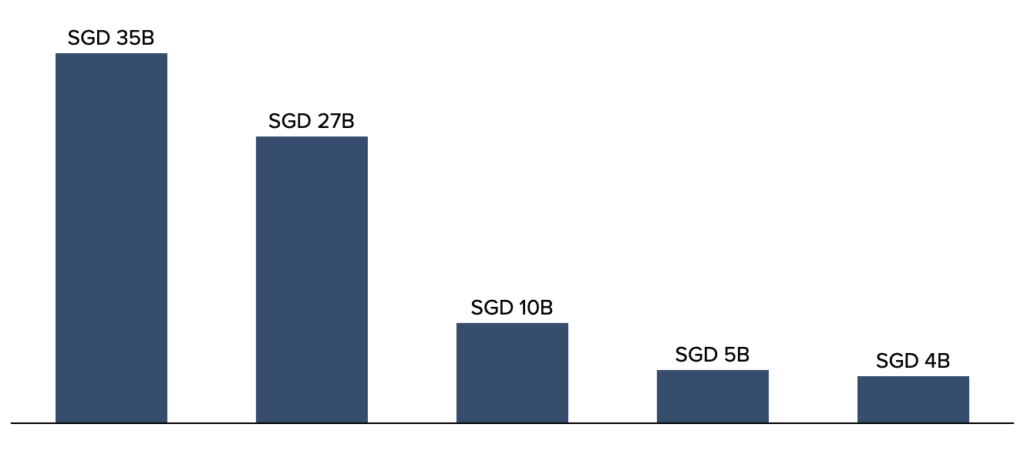
Source: Singapore Digital Economy Report 2025
Key Fintech Sub-Segments
Based on the Fintech industry report jointly published by PwC and the Singapore Fintech Association, the city-state’s Fintech ecosystem can be broken down into the following key sub-segments:
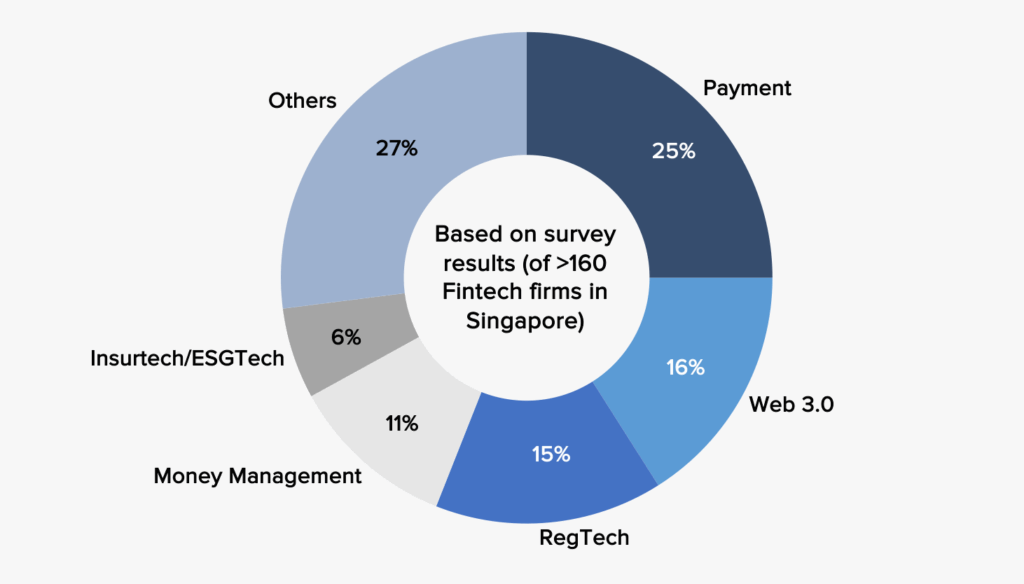
Source: Fintech’s State of Play 2.0
Payments
This remains the dominant segment, reflecting Singapore’s strong emphasis on digital transactions and innovative payment solutions, e.g., SGQR, FAST, etc.; it also includes money transfer and remittance, online payment gateway, mobile wallet, BNPL, etc. Payment is the most mature sector within the Fintech landscape/ecosystem in Singapore.
Web3
This segment, encompassing Blockchain and Digital Assets, has seen rapid expansion in recent years. In 2022, when PwC first published the industry report, Web 3 only accounted for 5% of the Fintech ecosystem (based on the number of respondents). In 2024, Web 3 accounted for 16%, the second largest segment behind payment. This significant increase was largely driven by regulatory clarity from the MAS and continued interest in cryptocurrencies and tokenisation.
RegTech
Essential for compliance and security, RegTech solutions are crucial in navigating Singapore’s complex regulatory environment, especially with increasing regulatory demands.
Insurtech/ESGTech
While Insurtech focuses on digital disruption in the insurance sector, ESGTech is an emerging area that has attracted significant attention due to increased disclosure requirements and sustainable finance initiatives.
Others include money management (wealth management, personal finance, and robo-advisory services) and lending (various forms of digital lending).
Key Fintech Investment Trends in Singapore
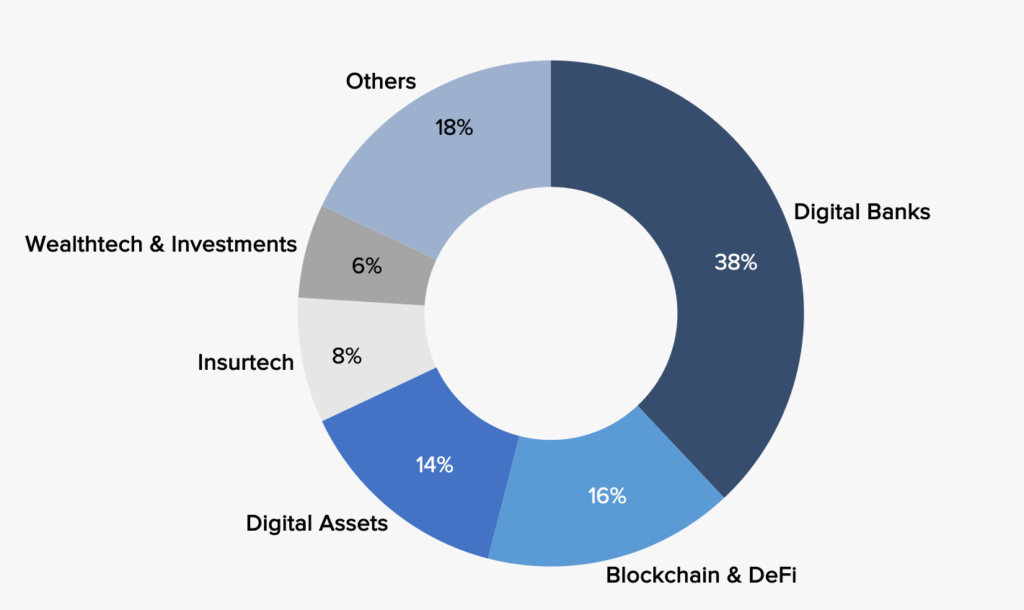
Compared to the hype during Covid, Fintech investments in Southeast Asia have started to recover in 2024 with a slight increase in deal value. Fintech investments in Southeast Asia have shown resilience, with the region being the only one globally to see an increase in deal value in 2024. Singapore, as the most developed hub, contributed significantly, accounting for 50%–70% of the region’s total Fintech investment value. While deal value and counts have dropped, the average deal size in Singapore has consistently increased over the years, reaching US$15 million in 2024. The largest vertical for investment in 2024 was Digital Banks (38%), followed by Blockchain & DeFi (16%), and Digital Assets (14%).
Southeast Asia Fintech Investments Value (2020–2024)
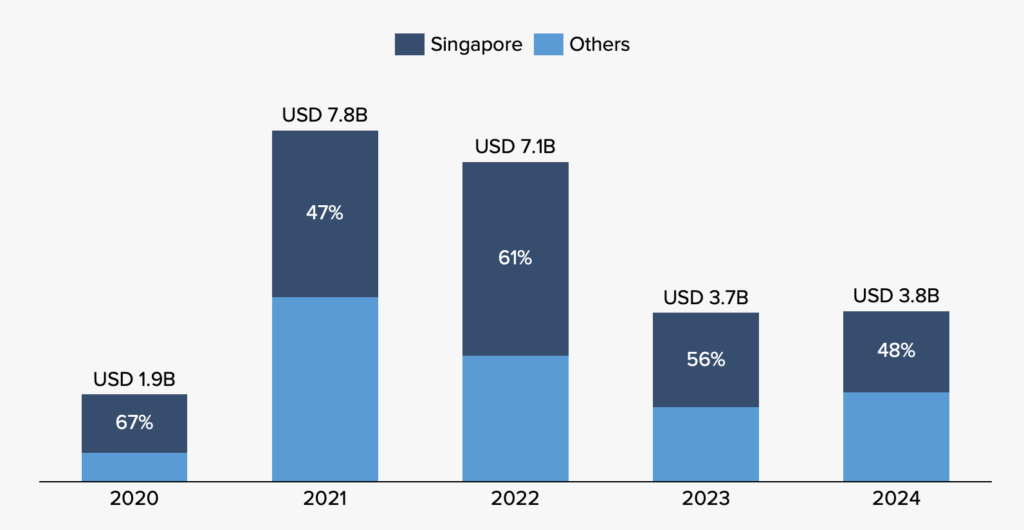
Source: Global State of Fintech 2024
Singapore, as the most developed financial centre and Fintech hub in Southeast Asia, has been the most significant contributor (50%–70%) to the region’s Fintech investment value over the years. The average size (investment value) per deal has consistently increased as the sector continues to mature and later-stage Fintechs seek larger funding rounds.
Fintech Investment Average Deal Size in Singapore
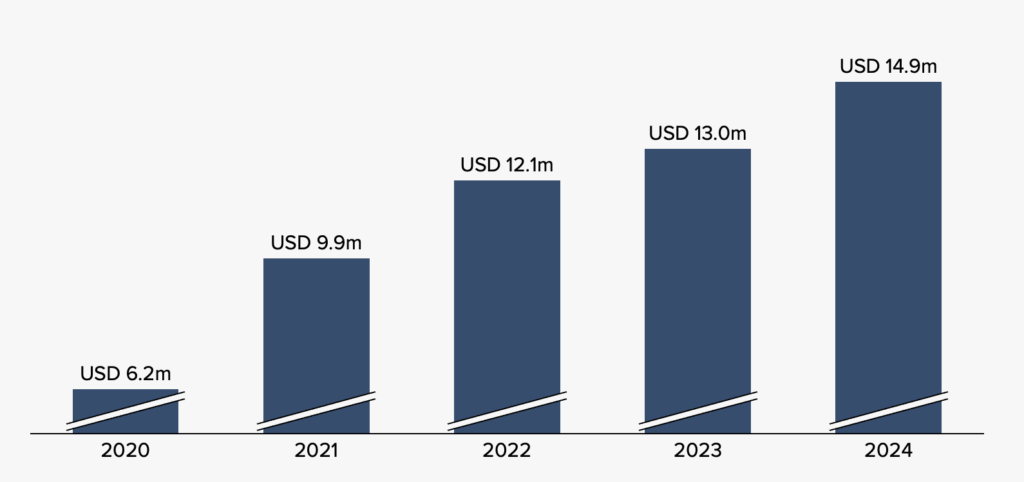
Source: Global State of Fintech 2024
By vertical, Digital Banks was the largest contributor to Singapore’s Fintech investment value in 2024. This was mainly thanks to the Brazilian Fintech giant’s, Nu Holdings, US$250M investment in Tyme Group, a digital bank initially in South Africa and has expanded to Asia and relocated its corporate headquarters to Singapore. Its relocation also reaffirmed Singapore’s success of establishing itself as a key global financial centre in Asia, fostering global market connections, and aiding Asia’s development broadly.
Singapore Fintech Investments Distribution by Vertical
Source: Global State of Fintech 2024
Blockchain & DeFi and Digital Assets were the second and third largest contributors to Singapore’s Fintech investment value in 2024, respectively. Although these verticals are not exactly the same, they can be grouped under one “Web 3” category. Its significant contribution (30%) to the nation’s Fintech deal value in 2024 underscored the country’s and its regulator’s early and consistent efforts to foster and adopt innovations in distributed ledger technologies.
Regulatory and Policy Environment
Singapore’s position as a global Fintech hub is strongly supported by its progressive regulatory and policy environment, shaped by the Monetary Authority of Singapore (MAS). Acting both as regulator and active promoter of innovation, MAS has created conditions where new technologies can develop without compromising financial stability or consumer protection.
Through initiatives like the Fintech Regulatory Sandbox, the Singapore Fintech Festival, the BLOOM initiative, and Project Guardian, MAS enables experimentation, industry collaboration, and responsible deployment of emerging technologies. This balanced approach—encouraging innovation while maintaining robust oversight—has attracted investment, nurtured growth, and ensured Singapore’s Fintech policies remain forward-looking and responsive to industry needs.
Key Trends to Watch
Singapore’s Fintech landscape is evolving quickly, powered by trends reshaping financial services and attracting strong investment and talent.
AI and machine learning
AI is now central to Singapore’s Fintech growth, improving risk management, fraud detection, credit scoring, and personalised financial advice. Over 30 financial institutions have established AI functions, some as global centres. The National AI Strategy 2.0 highlights finance as a priority, focusing on responsible AI and talent development.
Digital assets and tokenisation
Singapore is emerging as a leader in digital assets, with tokenisation improving efficiency through fractional ownership and automated settlement. MAS’ Project Guardian has expanded from pilots to commercial networks across funds, bonds, FX, and structured products. As regulations mature, more private exchanges and security-token platforms are expected.
The future of payments
Payments innovation remains a core strength. Singapore has driven real-time cross-border links, starting with PayNow-PromptPay in 2021 and expanding to Malaysia, Indonesia, and India. Project Nexus aims to connect multiple national systems globally, enabling faster and cheaper international transfers.
Green Fintech and sustainable finance
Sustainable finance is rising in importance. MAS’ Finance for Net-Zero Action Plan and platforms like Gprnt (formerly Project Greenprint) support ESG data automation and green capital flows. These initiatives reinforce Singapore’s ambition to be a global hub for green finance powered by Fintech innovation.
Key Beneficiaries
OxPay Financial (SGX: TVV)
OxPay Financial, founded in 2005 as MC Payment, is a pure-play Fintech company and a key enabler in the digital payments ecosystem. As one of the first payment processors to be licensed by the MAS, OxPay has established itself as a trusted partner for merchants. The company has a growing presence in Southeast Asia, with operations in Singapore, Malaysia, Thailand, and Indonesia.
OxPay’s business model is centred on providing online-to-offline merchant payment services and digital commerce enabling solutions. It offers a fully integrated platform that enables both online and offline businesses to accept a wide range of payment methods, streamline their operations, and accelerate growth. The company’s revenue is primarily derived from transaction fees on the payments it processes, with additional income from late charges.
OxPay is not a traditional financial institution adopting Fintech, but rather a Fintech company at its core. Its entire suite of products and services (e.g., eCommPay, OxPay Lite, Scan2Pay, etc.) is designed to facilitate digital payments. As a native Fintech company, OxPay is a direct beneficiary of and an active contributor to Singapore’s vibrant Fintech ecosystem. The government’s strong push towards a cashless society and the widespread adoption of digital payments are the primary drivers of OxPay’s business.
Singapore’s status as a regional hub also provides an ideal launchpad for OxPay to expand its services across Southeast Asia. As the digital economy continues to expand, OxPay is well-positioned to capitalise on the growing demand for seamless and secure payment solutions, making it a key player in the future of finance in the region.
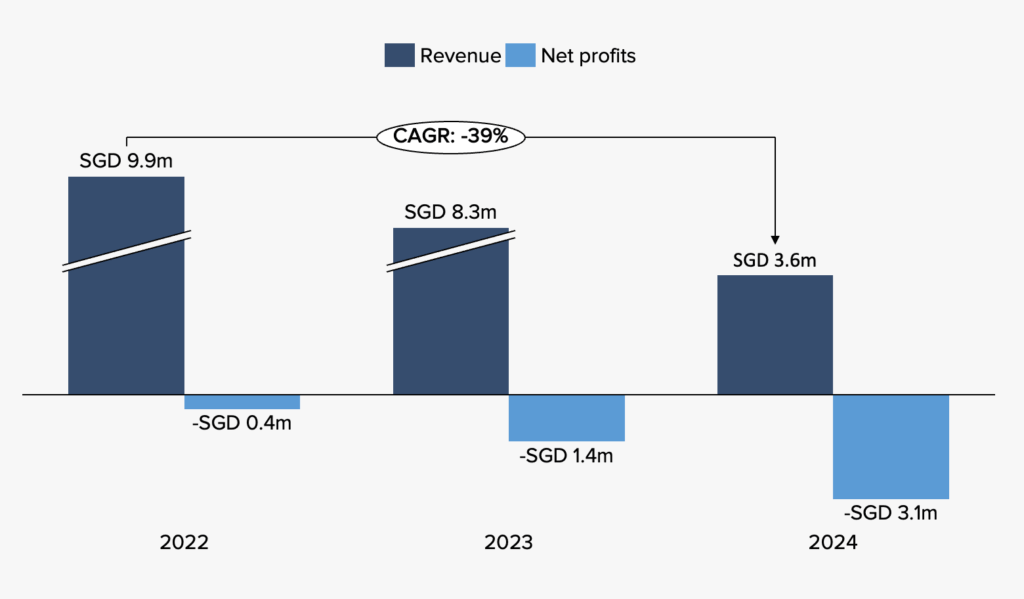
OxPay Financial Overview
Source: Company disclosures
MoneyMax Financial Services (SGX: 5WJ)
MoneyMax Financial Services is a leading pawnbroker and a prominent retailer and trader of pre-owned luxury goods, with a network of over 100 outlets across Singapore and Malaysia. The company currently operates through three main business segments:
- Pawnbroking, which forms its core business
- The retail and trading of gold and luxury items
- A secured lending arm that provides automotive and property financing.
MoneyMax has been at the forefront of digital innovation in the pawnbroking industry. A key initiative is MoneyMax Online, one of Singapore’s first online pawnbroking platforms, which allows customers to get valuations and cash for their valuables remotely. Beyond these customer-facing innovations, MoneyMax is also investing in AI and other digital initiatives to streamline its operations. These technologies are being used for process automation, inventory management, enhancing customer engagement, reducing fraud, and supporting data-driven decision making.
Singapore’s robust e-commerce infrastructure and the widespread adoption of digital payments provide a fertile ground for MoneyMax to grow its online presence and business. The company’s innovative approach to a traditional business model, combined with the supportive Fintech ecosystem in Singapore, positions it for continued growth and value creation.
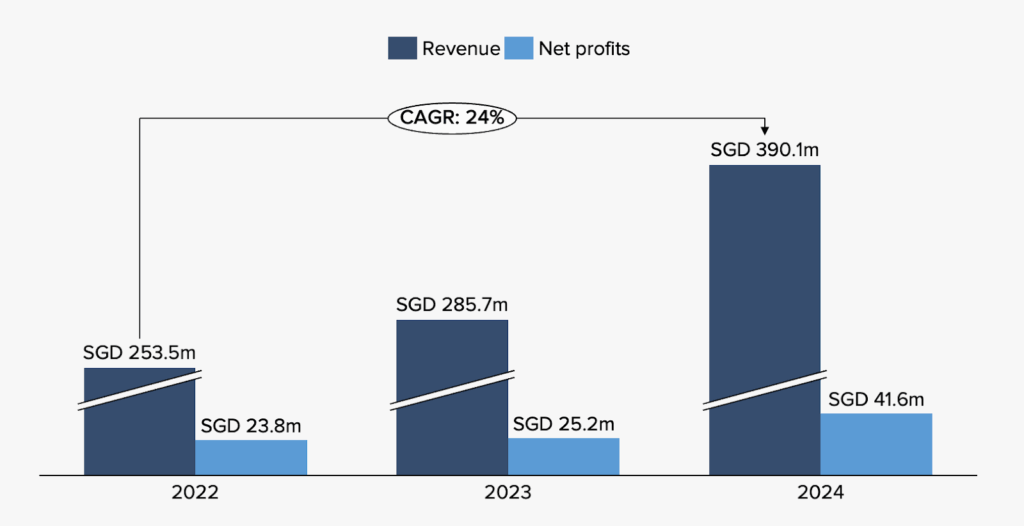
MoneyMax Financial Overview
Source: Company disclosures
Hong Leong Finance Limited (SGX: S41)
Hong Leong Finance (HLF) is the financial services arm of the Hong Leong Group Singapore. The company operates an extensive network of 28 branches and 13 SME Centres across the island, providing a comprehensive suite of financial services to both consumers and SMEs.
HLF provides a wide range of financial products and services, including deposits and savings, hire purchase, leasing, factoring, mortgages, car loans, etc. In recent years it has launched digital channels and a mobile app (HLF Digital) to allow customers to manage accounts and apply for loans remotely.
The company serves SMEs and consumers who increasingly expect seamless digital experiences. Hence, HLF’s investment in its digital capabilities will be crucial for retaining and attracting customers in the long run. Areas such as AI‑powered lending and digital‑banking platforms have continued to attract significant attention and funding. By leveraging these innovations and tapping into the vibrant local Fintech ecosystem for potential collaborations and partnerships, HLF can integrate new technologies and services into its platform, e.g., automate underwriting, deploy digital loan origination, etc.
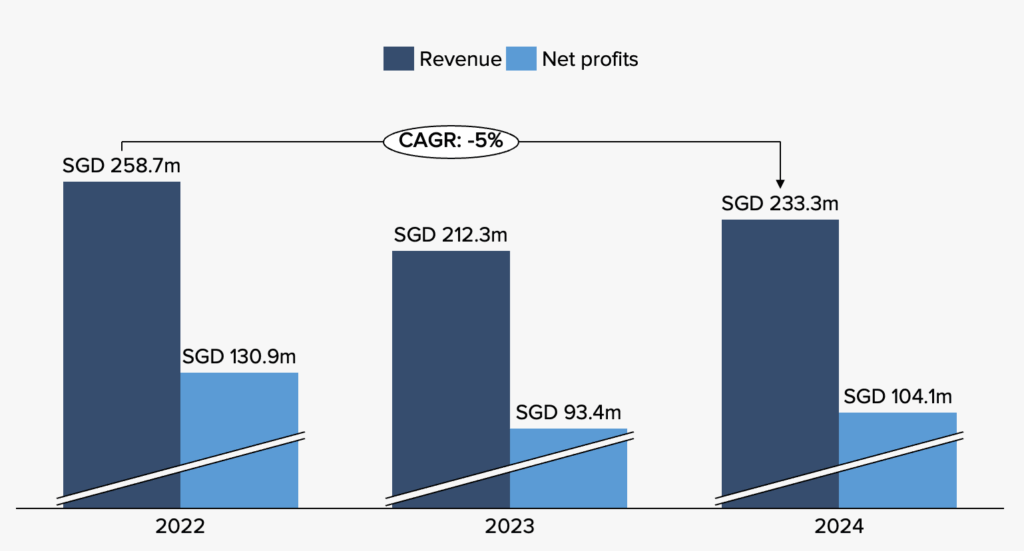
Hong Leong Finance Financial Overview
Source: Company disclosures
IFS Capital Limited (SGX: I49)
IFS Capital is a non‑bank financial institution. With Phillip Assets Pte Ltd being its major shareholder, it is part of the PhillipCapital network.
IFS Capital’s business model is diversified, with a primary focus on commercial financing services. These include factoring, asset-based lending, working capital loans, term loans, supply chain financing, etc. The Group manages a diversified business portfolio that extends to asset management, insurance, and Fintech services.
The company has strategically integrated Fintech into its business model, particularly through its subsidiary, Friday Finance. As a licensed moneylender in Singapore, Friday Finance operates a digital portal for consumer loans, emphasizing financial wellness with affordable and transparent pricing. This digital-first approach to consumer lending allows IFS to tap into a new customer segment and compete with emerging Fintech players.
Besides consumer lending, IFS has also embraced other Fintech innovations such as Earned Wage Access (EWA) solutions, which are gaining traction as a flexible and employee-friendly financial wellness tool. The company also operates a loan aggregator for both business and personal loans, and provides marketplace services, further digitizing its lending and financing operations.
These initiatives demonstrate IFS Capital’s commitment to leveraging technology to enhance its service offerings and reach a broader customer base. The company’s focus on innovation and technology enables it to better serve SMEs and individuals with more customised financial solutions.
IFS Capital Financial Overview
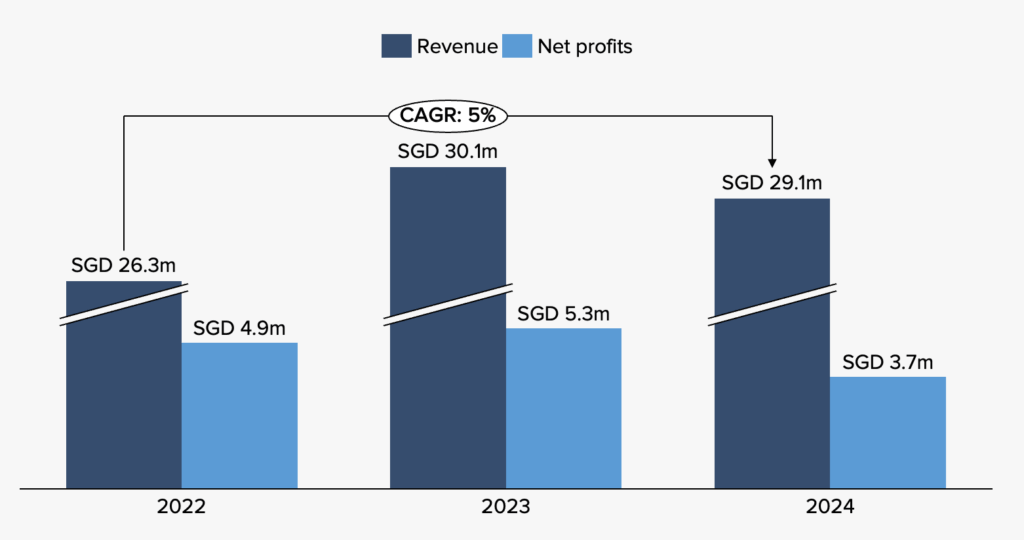
Source: Company disclosures
UOB‑Kay Hian Holdings Limited (SGX: U10)
UOB-Kay Hian Holdings (UOBKH) is one of Singapore’s largest and most established brokerage firms, backed by the UOB Group.
Headquartered in Singapore, UOBKH has a vast global footprint with over 80 branches across Southeast Asia, Greater China, the UK, and North America. The company’s core business revolves around providing a comprehensive range of financial services, including stock and futures broking, investment trading, structured lending, margin financing, and corporate finance. It serves a diverse client base, from retail investors to HNWI, large corporations, and institutional clients, offering them access to a wide array of financial products, e.g., equities, bonds, unit trusts, futures, options, CFDs, and FX.
As a traditional brokerage company, UOBKH has embraced technology to maintain its competitive edge. The company provides its clients with sophisticated trading tools through its UTrade platform. A significant recent development is the launch of a next-generation, direct-to-consumer platform in partnership with FNZ (a global financial technology company that provides an end-to-end wealth management platform) in May this year. This innovative platform is designed to transform the unit trust investment journey for both retail and private clients by providing a streamlined and intuitive digital experience.
These initiatives highlight UOBKH’s commitment to leveraging modern technology to enhance wealth management services and improve the client experience, moving beyond just trade execution to more holistic investment management.
UOB-Kay Hian Holdings Financial Overview
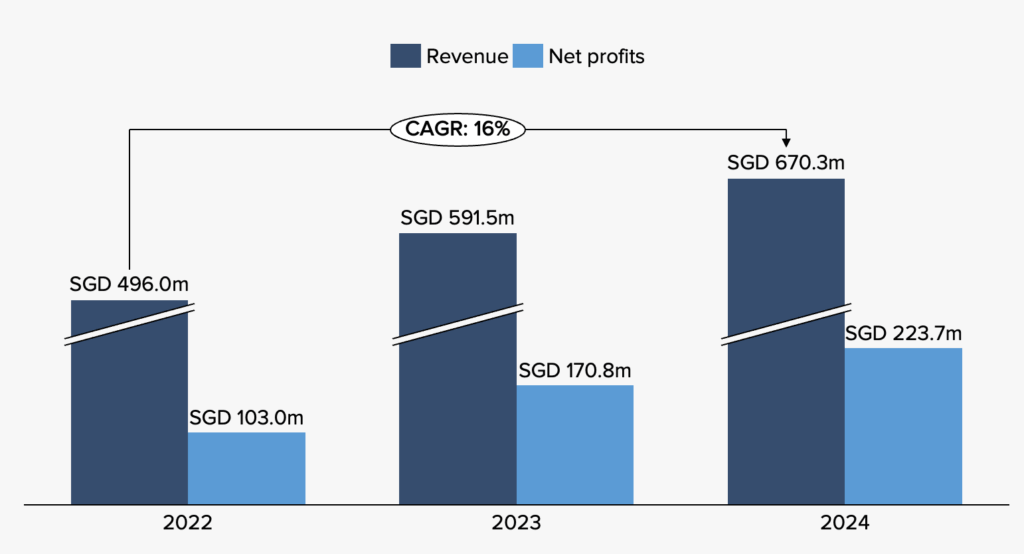
Source: Company disclosures
Syfe’s Disruptive Technology Portfolio
Syfe’s Disruptive Tech portfolio is designed as a one‑stop solution for investors seeking diversified exposure to multiple innovations that are reshaping the world.
As of 30 September 2025, the portfolio allocated capital across eight thematic exchange‑traded funds (ETFs) covering:
- Generative AI (Roundhill Generative AI & Technology; 18.53%)
- Video‑gaming and e‑sports (Vaneck Video Gaming & eSports; 15.45%)
- Cybersecurity (First Trust Cybersecurity; 13.3%)
- Blockchain (Amplify Transformational Data; 12.44%)
- IoT (Global X Internet of Things; 11.48%)
- Robotics & AI (Global X Robotics & AI; 9.92%)
- Semiconductors (VanEck Semiconductor; 9.62%)
- Cloud computing (Global X Cloud Computing; 9.26%)
Each ETF above is institutional‑grade and provides targeted exposure to companies at the forefront of its respective theme. The portfolio is globally diversified across developed and emerging markets and is periodically re‑optimised to include emerging innovations, helping investors manage the high volatility often associated with disruptive‑technology stocks.
Although labelled as a broad technology strategy, the Disruptive Tech portfolio offers meaningful exposure to Fintech. Singapore’s rise as a fintech powerhouse is reshaping its economic landscape and creating new opportunities for investors.
Capture the growth in Singapore’s fintech sector through Syfe Brokerage or Syfe’s global thematic portfolios today.
Access the full report here.


You must be logged in to post a comment.