

Bonds have been slipping this year as interest rate expectations shifted, with even the supposedly safer holdings caught in the wave. In reality, bonds are behaving exactly as designed – and the same mechanics behind that fall could soon pay off for you. Here’s how.
Back to basics: How do bonds work?
When you invest in a bond, you are lending to a government or company. In return, you receive regular interest – the coupon – plus your principal back at maturity i.e. when the bond expires. Those payments are contractual, which is why bonds are called “fixed income”.
Between now and the maturity date, prices fluctuate – with an inverse relationship to interest rates. When rates rise, newly issued bonds carry higher coupons, making older, lower-coupon bonds less attractive – so their prices fall. The reverse happens when rates fall.
Central banks guide short-term interest rates to meet economic policy objectives (e.g. higher rates to tame price rises), with long-term rates additionally influenced by growth, inflation, and government debt projections on a longer horizon.
These expectations have shifted dramatically since the start of the year, with the Iran War’s energy shock lifting US inflation to 4%. Markets went from betting on two rate cuts from the Federal Reserve to one hike by year end – driving yields up and bond prices down.
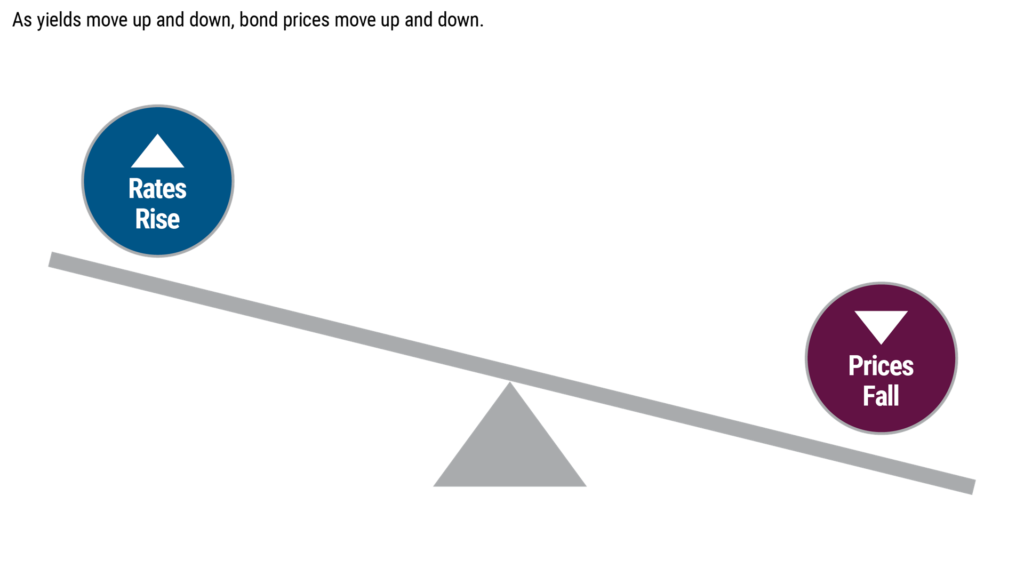
Illustration by PIMCO.
What drives the returns of my bond portfolio?
Two key forces help determine your bond returns.
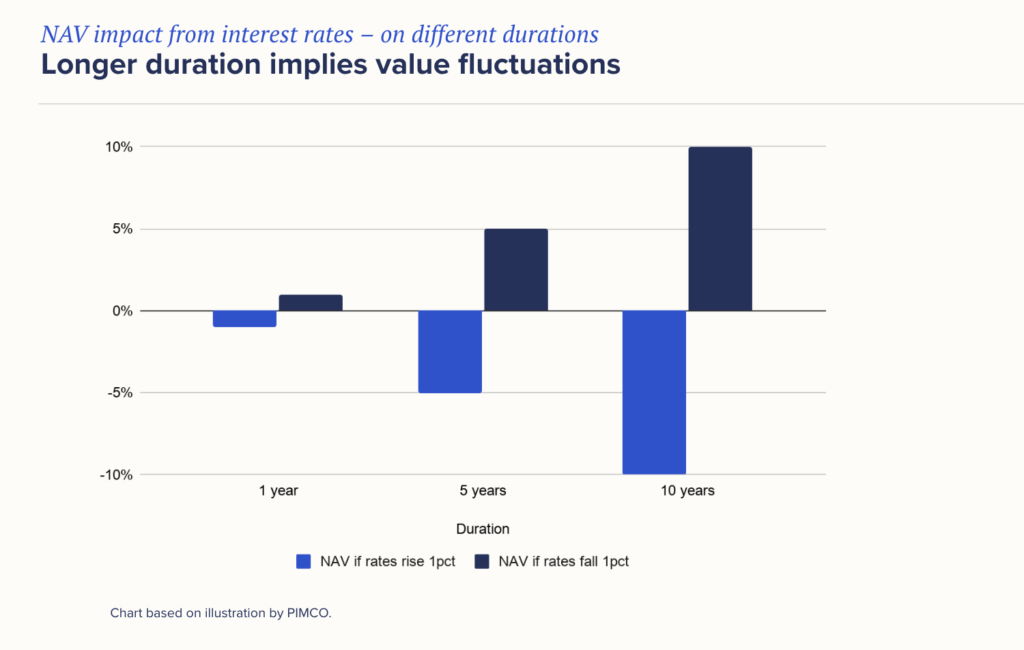
- Rate sensitivity, measured by duration: Each year of duration means roughly a 1% price move for every 1 percentage point change in interest rates. For example, a bond with 7 years of duration loses about 7% if rates rise 1 point – and gains about as much if they fall. Longer-dated bonds carry more duration and swing harder when rates move.
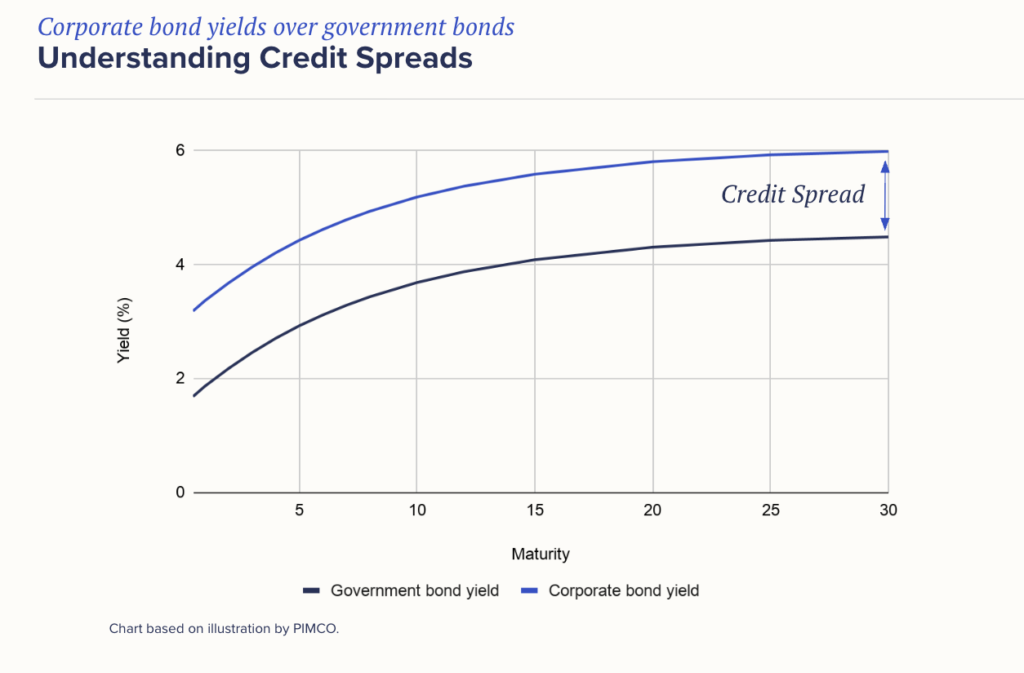
- Credit risk, priced through spreads: That’s the extra yield a bond pays over safer government debt of similar maturity. A corporate bond yielding 6% against a Treasury at 4.5% carries a 1.5-point spread. Spreads widen when confidence in the borrower weakens, and narrow when it improves. Essentially, a live barometer of risk appetite.
While interest rates have moved a lot this year because of inflation, spreads have largely held steady, in the absence of severe credit stress (i.e. companies unable to repay debt) in the economy. This meant government bonds, typically seen as safer than others, have lost more ground than “credit”, or corporate bonds.
This is why a portfolio like Income+ Enhance – with credit exposure – has outperformed Income+ Preserve, which is heavier on government bonds and has a longer duration bias, even though Enhance carries a higher risk rating.
Why income now: The power of starting yield
The challenging backdrop is in fact creating ideal entry points – for three reasons:
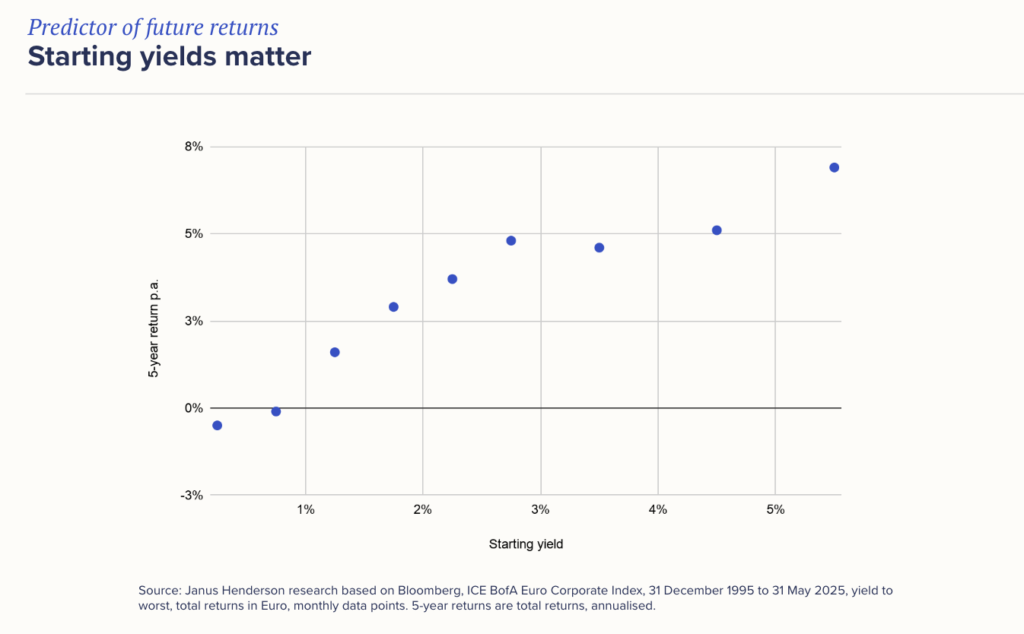
- Starting yield – the math is on your side: Your starting yield is a strong predictor of what a bond delivers over the next five years. Coupons accrue daily whatever prices do, and as bonds approach maturity, prices pull back towards face value – paper losses unwind while income compounds. With 10-year US Treasury yields above 4.5%, that income engine is running at levels unseen in years.
- Inflation (still) looks temporary: Oil has been back at pre-war levels, and even if prices stay elevated, energy is a much smaller piece of US inflation than shelter costs, which have been cooling. Disinflation could be back in the driving seat by next year. The Fed could end the year holding, not hiking.
- Time to position of the pivot: Longer-dated bonds lock in today’s elevated yields for longer, and gain most when rate cuts arrive. Overall duration remains below where they were in 2022, when we had the last global energy shock. At these yields, rates would need to rise substantially further before income stopped covering price losses, while even a modest fall delivers outsized gains.
How do I invest for income now?
Selling now converts a temporary price move into a permanent one – at precisely the moment starting yields turned in your favour. Staying invested keeps contractual coupons compounding: Income+, actively managed with PIMCO, is currently paying out 5–6% per annum – which you can boost to 7% with a time-limited promo – well above deposit rates in Singapore. If anything, these yields make the case for adding – not exiting.


