

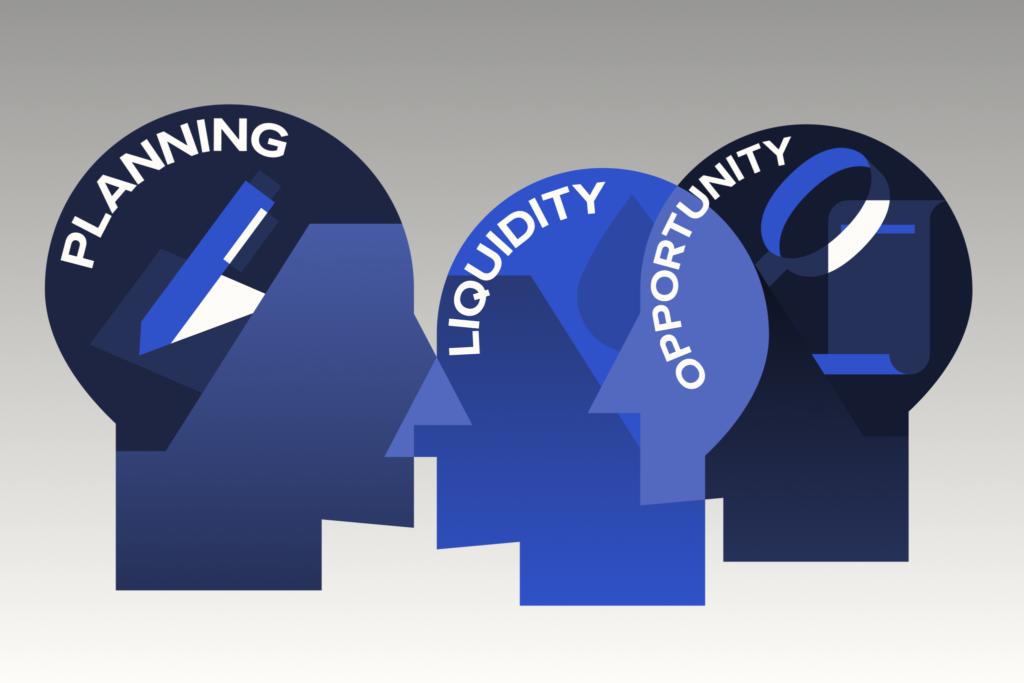
We’re all wired differently when it comes to money.
Some of us save every spare dollar, while others prefer to keep cash within easy reach. Understanding your savings personality can help you make more intentional financial decisions, and choose the right home for your cash depending on what you’re saving for.
In this article, we explore how different types of personalities can result in different outcomes and how you can make your cash work harder for you regardless of which personality type you are.
Table of contents
- Why your savings style matters
- The four cash personalities
- One goal, four different approaches
- Finding the right place for your savings
- Final thoughts
Why your savings style matters
When people talk about managing money, the conversation often revolves around budgets, interest rates or investment returns. Yet one factor is often overlooked: personality.
Our attitudes towards money influence the choices we make every day. They shape how much cash we keep on hand, how comfortable we are taking risks, and even whether we remember to move idle cash into higher-yielding accounts.
Two people with the same income can end up with very different financial outcomes simply because they approach money differently.
There isn’t a “perfect” savings personality. Every mindset comes with strengths, and every one has blind spots. The key isn’t trying to become someone else, but understanding your own habits so you can build a cash strategy that works with them, not against them.
Here are four common cash personalities.
The four cash personalities
The Planner
The Planner likes having a roadmap. They enjoy setting financial goals, tracking progress and preparing for future expenses well in advance. Whether it’s next year’s holiday, a home renovation or building an emergency fund, they feel most comfortable when every dollar has a purpose.
This approach has its advantages. Planners tend to save consistently and are less likely to be caught off guard by unexpected expenses. Their discipline often helps them achieve long-term goals with less stress.
Their challenge is that sometimes they become so focused on saving that excess cash sits in low-interest accounts just because it feels safe. Over time, that leads to missed opportunities for their savings to grow.
For Planners, reviewing where your cash is parked can be just as important as deciding how much to save in the first place. Put a date against each financial goal and review where the money is held. Cash that is not needed immediately may not require the same level of liquidity as your emergency fund.
Cash+ Enhanced can be a natural fit for money you’ve already earmarked for future goals—whether that’s a holiday, wedding or renovation. Once you’ve decided the purpose of the money, it’s worth considering whether it’s sitting in the right place.
The Liquidity Seeker
The Liquidity Seeker likes knowing their money is within reach whenever they need it, whether it’s for a spontaneous holiday, an unexpected bill or simply peace of mind.
There’s nothing wrong with valuing liquidity. Life is unpredictable, and maintaining easy access to cash can reduce financial stress.
However, keeping all your savings in highly liquid accounts often comes at a cost. Money that’s unlikely to be spent for months—or even years—may earn relatively little while inflation erodes its purchasing power.
A more balanced approach is to separate truly accessible cash from money that’s been set aside for future plans. Not every dollar needs the same level of immediate access.
If you’re a Liquidity Seeker, keeping your everyday buffer in Cash+ Flexi lets you maintain easy access while keeping that money separate from longer-term savings.
The Opportunity Hunter
Opportunity Hunters enjoy finding the best deals. They’re constantly comparing rates, looking for promotions and trying to maximise every dollar, and aren’t afraid to move their money when it makes financial sense. And this habit often pays off for them.
The downside is that constantly chasing the next best offer can become exhausting. Short-term promotions come and go, and frequent switching may leave people focusing on small gains instead of building a simple, sustainable savings strategy.
Before switching, look beyond the headline rate. Consider whether returns are guaranteed or projected, whether the value can fluctuate, how quickly you can withdraw and whether any lock-ins or conditions apply.
For Opportunity Hunters, having a dedicated solution can help reduce the temptation to constantly hop between short-term promotions, while still keeping your cash aligned with your goals.
The Procrastinating Saver
This personality doesn’t dislike saving—they’re just busy. Their salary lands in the bank account each month, bills get paid, and whatever remains stays where it is. Every now and then they think, “I’ll get around to sorting out my money,” but then another busy week takes over and no action is taken.
Life has a habit of getting in the way. Between work, family and everyday responsibilities, optimising cash often slips down the priority list.
But cash that would otherwise remain idle can potentially earn more simply by being placed in a solution that’s better aligned with its intended purpose.
Often, the hardest part is simply getting started. Reducing the number of decisions makes it easier to turn intention into action.
If you’re a Procrastinating Saver, simply moving money that’s already sitting untouched into a solution that’s better suited to medium-term savings can be an easy first step. If you’ve set aside money that you know you won’t need for a fixed period, Cash+ Guaranteed offers a structured option in exchange for greater certainty.
One goal, four different approaches
Imagine four friends are each planning a holiday in 18 months’ time. They all need the same amount of money, but they approach the goal very differently.
The Planner creates a monthly savings target and sticks to it religiously.
The Liquidity Seeker keeps the holiday fund in an everyday savings account because they like knowing they can access it whenever they want.
The Opportunity Hunter researches different options, comparing rates before deciding where to park the money.
Meanwhile, the Procrastinating Saver intends to start saving next month, but somehow keeps postponing it.
None of these approaches is inherently right or wrong. The difference lies in how effectively each person’s cash strategy supports the goal they’re trying to achieve.
Someone saving for next weekend’s expenses has different needs from someone setting money aside for a trip next year. Likewise, someone building a long-term emergency fund may make different choices from someone saving towards a property purchase.
Your personality influences how you naturally save, but your goals should determine where that money lives.
Finding the right place for your savings
Different pots of money serve different purposes, and the best place for your cash depends on when you’ll need it.
Your personality may influence which features feel most appealing, but the right solution still depends on what the money is for, when you may need it and the trade-offs you can accept.
The money you use regularly benefits from flexibility and easy access. Cash set aside for future plans may be able to work harder while remaining relatively accessible. Meanwhile, funds that you know you won’t need for a fixed period can potentially benefit from solutions offering greater certainty.
This is the thinking behind Syfe’s Cash+ range: giving you the flexibility to match different pools of cash with different financial goals, instead of expecting one account to do everything.
The point isn’t that one solution is universally better than another. Many people are actually a mix of personalities, and it’s perfectly normal to use different cash solutions for different goals.
For everyday liquidity, Cash+ Flexi is designed for cash you may need at short notice.
For money that’s already been set aside for future goals, Cash+ Enhanced offers the potential to earn more on idle cash while remaining suitable for medium-term planning. It’s for money that has a specific purpose, even if that purpose is still months away.
Finally, Cash+ Guaranteed is designed for money you can confidently lock away for a fixed period in exchange for greater certainty.
Different cash goals call for different approaches. Understanding your own savings personality may shape how you approach your money. Your goal, timeline and comfort with risk should determine where it goes.
Final thoughts
Your personality influences far more than your spending habits—it also shapes how you save.
Whether you’re a meticulous Planner, a Liquidity Seeker, an Opportunity Hunter or someone who’s still meaning to organise their savings, recognising your natural tendencies is the first step towards making better financial decisions.
The goal isn’t to change your personality. It’s to build a cash strategy that complements it.
Keep everyday money accessible. Set aside future savings in a way that reflects your timeline. And if you know you won’t need part of your cash for a fixed period, consider whether a more structured option makes sense.
When your savings strategy matches both your personality and your goals, your cash is better positioned to support whatever comes next.
Read More:
Where Should You Keep Your Cash? A Guide to Matching Every Dollar to Its Purpose
How To Earn $1,000 In Passive Income Each Month: A Singaporean’s Guide


