Investing Basics
How To Build A Passive Income Portfolio In Singapore
REITs, dividend stocks and income portfolios compared, with tips for getting started.


The Fed hiked and bond yields hit multi-decade highs, yet stocks held their ground on AI-driven earnings. The usual havens, bonds and gold, took the hit instead.

A scoreboard of the numbers that matter, and what actually drove them.
Total returns in SGD. Source: Bloomberg, as of 30 September 2026.
The Fed hiked for the first time in three years (to 3.75–4.00%) as inflation stayed sticky and oil rebounded, with Brent briefly topping US$130 a barrel. It wasn’t acting alone: the ECB, Bank of Japan and Reserve Bank of Australia also raised rates. But it was worries about growing government debt, especially in developed markets, that drove much of the rise in bond yields (the US 10-year hit pre-crisis highs). Bonds fell, and so did gold, which pays no income to offset higher yields. Amid the turmoil, equities held their ground on strong earnings: Q3 profit forecasts rose 1.4% during the quarter, in a quarter when they, more often than not, fell. But the rally’s risk was in its narrow base, powered mostly by the frantic AI trade.
September’s was a “credibility hike”, not the start of a new cycle. What markets are worried about is the Fed’s willingness to bring down inflation, not that prices are already out of control. And although the Fed may raise rates further to achieve its objective, markets’ pricing of three to four hikes by mid-2027 looks too pessimistic, especially as the impact of energy and tariffs is temporary by nature. If the 10-year yield stabilises around 5.5%, that rich income can cushion further downside and set investors up for potentially double-digit returns when interest rates turn. That gives us conviction in staying invested in the short to middle part of the yield curve. Equities may take a near-term hit as higher interest rates discount more of future profits, but strong earnings can outweigh that – especially when supported by historic AI-driven earnings. In seven hiking cycles since the late 1980s, US stocks averaged a 9% gain in the year after the first hike.
Each month we go deep on one Syfe portfolio.
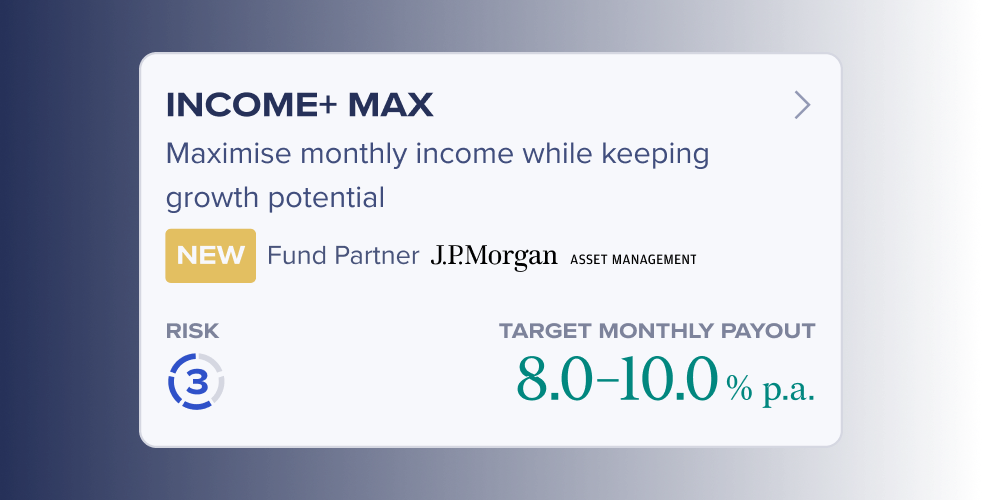
Balancing growth and income is getting harder in an uncertain world. The ongoing AI rally has rewarded investors but has also left balanced portfolios lopsided: a 60/40 mix set up at the end of 2022 would have drifted to more like 70/30 by this year, while S&P 500 dividends pay less than a six-month Singapore T-bill. Income+ Max complements our existing Income+ range by drawing on different sources of return. It holds stocks, bonds and gold, with J.P. Morgan Asset Management as a key fund partner. Most of its income comes from options, complementing our bonds-focused income solutions. It targets payouts of 8–10% p.a., paid monthly in USD.
Income+ Max is denominated in USD and carries a Syfe risk rating of [High – confirm], with a recommended holding period of [5+ years – confirm]. Target payouts are not guaranteed and may be paid from income or capital; a positive payout does not imply a positive return.
REITs, dividend stocks and income portfolios compared, with tips for getting started.
What it takes to build S$1,000 a month, from fixed deposits and bond ladders to dividend stocks.
Why the balanced portfolio needs a rethink, and how Income+ Max turns volatility into monthly income.